
Epicurean Ethics - Head And Heart Study Guide
A Six Session Study Guide In Epicurean Ethics - Currently Under Preparation And Active Revision
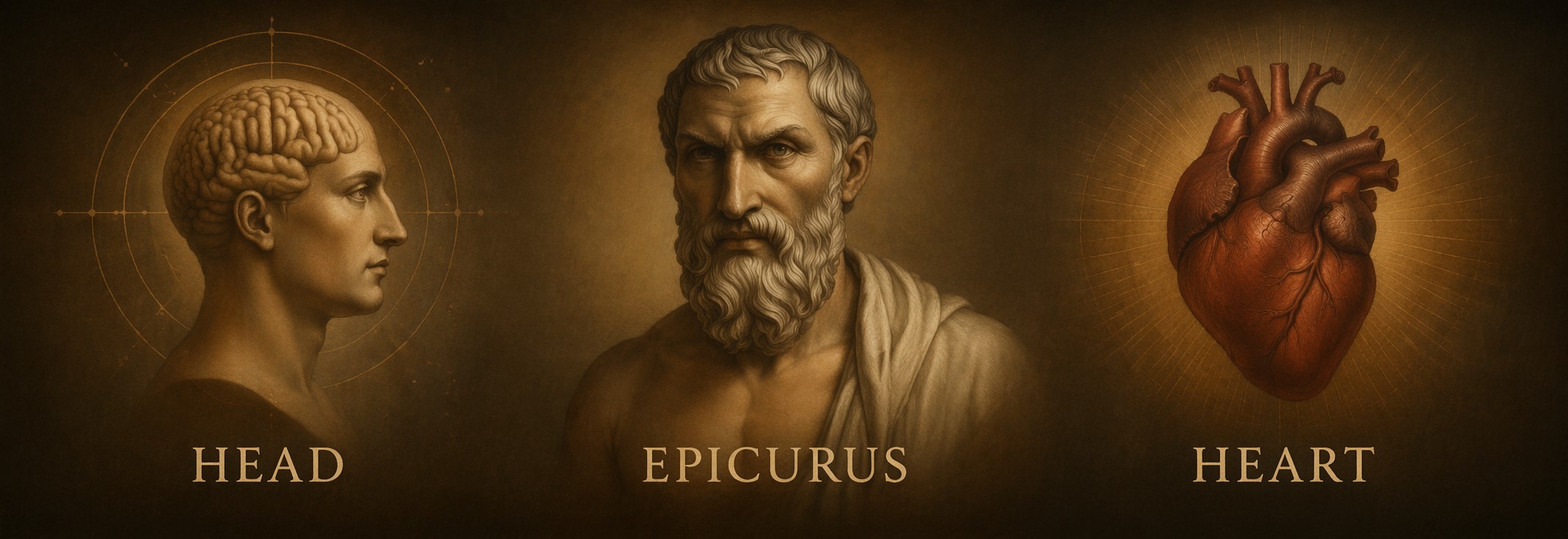
Preface: The Head and Heart Framework Of This Study Guide
Section titled “Preface: The Head and Heart Framework Of This Study Guide”On October 12, 1786, Thomas Jefferson wrote one of the most remarkable letters in American intellectual history — a twelve-page dialogue addressed to Maria Cosway in which his Head and his Heart argue about the value of friendship, the nature of happiness, and whether reason or feeling is the better guide to life. The Head warns against attachment, calculates risks, counsels prudence. The Heart insists that friendship and affection are not liabilities to be managed but the very substance of a life worth living — and ultimately wins the argument. Jefferson closes with the Heart’s verdict: “Morals were too essential to the happiness of man to be risked on the uncertain combinations of the head.”
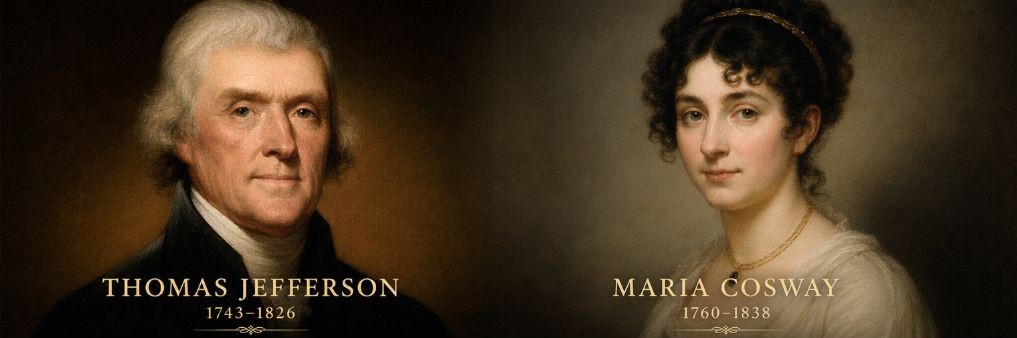
Jefferson was, by his own explicit declaration, an Epicurean. In a letter to William Short on October 31, 1819, he wrote: “I too am an Epicurean. I consider the genuine (not the imputed) doctrines of Epicurus as containing every thing rational in moral philosophy which Greece and Rome have left us.” He compiled a personal Syllabus of the Doctrines of Epicurus, owned multiple copies of Lucretius, and modeled his most famous phrase — “the pursuit of happiness” — on Epicurean foundations.
The Head and Heart letter is not merely a personal document. It is Jefferson’s own Epicurean ethics enacted in literary form: the dialogue between rational argument and felt experience that Epicurus himself held together in a philosophy designed to be both logically rigorous and humanly warm. Epicurus was not a cold rationalist who happened to conclude that pleasure mattered; he was a philosopher who understood that the Head and the Heart must work together, and that a philosophy which satisfied only one of them would fail at the most important task — teaching people how to actually live.
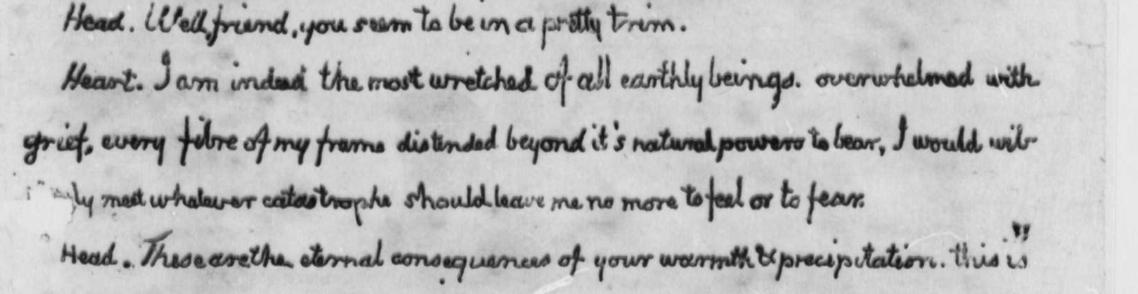
This six-session study outline presents Epicurean ethics through both dimensions simultaneously: the rational arguments (the Head) and the felt, personal, and relational dimensions (the Heart), with Jefferson’s letter and writings as a recurring point of contact between ancient philosophy and modern moral thought.
But there is a deeper purpose to the Head and Heart framework than simply organizing the material. It reflects a genuine tension that runs through all of Epicurean ethics — and that Jefferson dramatized with remarkable precision in his letter.
Epicurean ethics is, at its core, the intelligent pursuit of pleasure. Torquatus, the Epicurean spokesman in Cicero’s On Ends, observes that most people end up praising pain and disparaging pleasure not because pain is actually better but because they do not know how to pursue pleasure intelligently. They chase the wrong things, pay costs they didn’t calculate, and then blame pleasure itself for the mess. Epicurus offers a rational framework for doing this better: understanding what pleasure actually is, identifying which desires lead to it and which destroy it, and dissolving the fears that distort the entire picture.
But — and this is the tension — a purely rational approach to the pursuit of pleasure can itself become a kind of trap. The Head that calculates every risk, that refuses every attachment because attachments can be lost, that treats every opportunity for joy as a potential liability to be managed, is not living wisely. It is living timidly. Ships are not built to stay in harbor where it is safe. They are built to sail. And the person who never risks the pain of loss in order to avoid it has already lost the very thing that makes life worth living.
Jefferson’s Head and Heart letter is the most vivid dramatization of this tension in the literature of Epicurean ethics. The Head opens the dialogue with exactly the kind of cautious, risk-averse calculation that is perfectly rational on its own terms. The Heart pushes back — not irrationally but from a deeper understanding of what life is actually for. And as the letter progresses, something important happens: Jefferson does not simply declare one side the winner. He shows, through the dialogue itself, why the Heart’s position is ultimately more consistent with the goal of happiness than the Head’s. The Heart’s final verdict — that morals were too essential to the happiness of man to be risked on the uncertain combinations of the Head — is not a rejection of reason. It is reason’s own conclusion, properly applied.
We will trace this tension across all six sessions, showing how it develops and resolves in both Jefferson’s thinking and in Epicurus’s own philosophy. The climax comes in Session Six, where we encounter one of the most important statements in all of Epicurean ethics — one that Diogenes Laertius records as Epicurus’s own position on the wise man, emotion, and the relationship between feeling deeply and living wisely.
Primary Sources Referenced Throughout
Section titled “Primary Sources Referenced Throughout”- LM — Epicurus, Letter to Menoeceus, in Bailey, Epicurus: The Extant Remains (1926)
- LH — Epicurus, Letter to Herodotus, in Bailey (1926)
- PD — Principal Doctrines, in Bailey (1926)
- VS — Vatican Sayings, in Bailey (1926)
- DL 10 — Diogenes Laertius, Lives of the Eminent Philosophers, Book 10
- DRN — Lucretius, De Rerum Natura (trans. Bailey or Rouse/Smith)
- Fin. — Cicero, De Finibus Bonorum et Malorum, Book I–II (Torquatus sections)
- ND — Cicero, De Natura Deorum, Book I (Velleius sections)
- Jeff. HH — Jefferson, Letter to Maria Cosway (“Head and Heart”), Oct. 12, 1786; Nationall Archives Link; Facsimile Images of Letter
- Jeff. Short — Jefferson, Letter to William Short, Oct. 31, 1819
- Jeff. Syllabus — Jefferson, Syllabus of the Doctrines of Epicurus (appended to Jeff. Short)
Secondary Sources
Section titled “Secondary Sources”- Bailey, Cyril. Epicurus: The Extant Remains. Oxford, 1926.
- DeWitt, Norman. Epicurus and His Philosophy. Minnesota, 1954.
- Long, A.A. and Sedley, D.N. The Hellenistic Philosophers, 2 vols. Cambridge, 1987. [L&S]
- Gosling & Taylor. The Greeks On Pleasure
Session One: What Kind of Ethics Is This? “Hedonism” Doesn’t Begin To Describe It!
Section titled “Session One: What Kind of Ethics Is This? “Hedonism” Doesn’t Begin To Describe It!”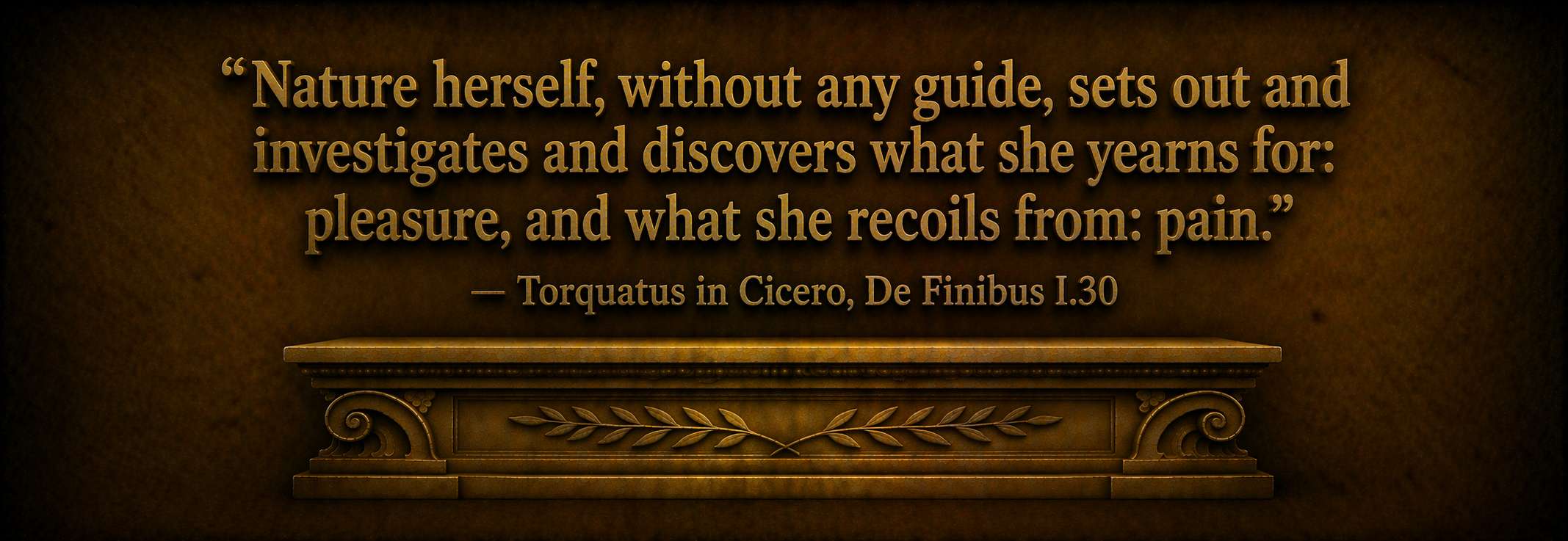
Epicurean ethics begins not with a list of duties or a catalog of virtues but with a question about the nature of the good: what does nature itself tell us about how to live? The answer — that pleasure is the beginning and end of the blessed life — sounds simple and has been made to sound scandalous. Session One establishes what Epicurus actually means, why the foundation is in nature rather than reason or revelation, and why the Head and the Heart must both be engaged from the very beginning.
I. The Head: Rational Foundation of Epicurean Ethics
Section titled “I. The Head: Rational Foundation of Epicurean Ethics”A. The Architecture: Three Pillars, One Philosophy
Section titled “A. The Architecture: Three Pillars, One Philosophy”Before examining individual arguments, it is worth understanding the structure of Epicurean philosophy as a whole. Epicurus organized his system into three interlocking disciplines:
- Canonic (epistemology): How do we know what is true? This is addressed in Session One.
- Physics (natural science): What is the nature of the universe? This is the foundation for Sessions One through Three.
- Ethics (how to live): What is the goal of life and how do we achieve it? This is the subject of the entire guide — but it cannot be understood without the first two.
These are not separate departments. Physics is the foundation of ethics: unless we understand that the universe is entirely natural, that there are no supernatural forces governing it, and that we live exactly once, we cannot correctly understand how to live or why the false beliefs that generate fear need to be identified and dissolved. As Epicurus stated directly: “There is no way to dispel the fear about matters of supreme importance, for someone who does not know what the nature of the universe is but retains some of the fears based on mythology. Hence without natural philosophy there is no way of securing the purity of our pleasures.” (PD 12)
One more structural point matters from the outset: Epicurean philosophy is adversarial, not conciliatory. Epicurus did not regard himself as one voice among many in a pluralistic philosophical conversation. He was a reformer who identified the dominant philosophical traditions of his day — Platonism, Academic Skepticism, and (before Zeno) the traditions that would become Stoicism — as active sources of human misery, and he opposed them directly and forcefully. The Socratics who rejected natural science, the Platonists who constructed a false “higher world” of Forms, the Skeptics who claimed nothing can be known — these are not fellow-travelers to be respectfully engaged but philosophical opponents whose errors cause real suffering. Understanding this adversarial posture is essential to understanding why Epicurean arguments take the form they take and why they are stated with such confidence.
B. The Criterion: Why Ethics Must Begin with Nature
Section titled “B. The Criterion: Why Ethics Must Begin with Nature”-
Pleasure as the primary natural good
- LM: “Pleasure is the beginning and end of the blessed life” — not as hedonistic declaration but as naturalistic observation; the infant’s first response to the world is toward pleasure and away from pain (DL 10.137)
- The argument from nature: what every creature seeks at birth, before any teaching or convention, is the first and most reliable indicator of what nature has established as good (DL 10.137; Fin. I.30)
- Contrast with Platonic and Stoic alternatives: Plato locates the good in the eternal Forms (accessible only to reason); the Stoics locate it in virtue alone (accessible only to the sage). Both remove the good from ordinary human experience. Epicurus returns it to the body and the felt life.
- Citation: “It is not possible to live pleasantly without living prudently and well and justly.” (PD 5) — virtue is real but instrumental; pleasure is the standard
-
The Canon: How We Know What Is Good
- The Epicurean canon (rule of truth) has three criteria: sensation (aisthesis), preconceptions (prolepseis), and feelings (pathe) (DL 10.31–34)
- Sensation: the senses report reliably; error enters only in the judgment we add to them (PD 22–24)
- Preconceptions: generalized concepts formed from repeated sensory experience — including the concept of pleasure itself — that function as operational definitions (DL 10.33)
- Feelings: pleasure and pain as the direct felt criteria of good and evil; not secondary to reason but foundational (DL 10.34; LM 129)
- The epistemological point: ethics cannot begin with abstract principle because we have no access to abstract principle that does not ultimately trace back to felt experience. This is not relativism; it is the rejection of a false foundation.
-
Against the Alternative Foundations
- Against Platonic rationalism: if the good is a Form accessible only to reason, it is inaccessible to most people and produces the constant deferral of happiness to a transcendent state. Epicurus’ epistemological doctrines (PD 22–24; VS 23) directly address this.
- Against Stoic virtue-alone: PD 5 is the direct refutation — the inseparability of virtue and pleasant living is stated as a two-directional claim. The Stoic reads only one direction (virtue → pleasure); Epicurus states both directions, making pleasure the criterion, not the byproduct. (Fin. I.42–54 for Torquatus’ full statement of the case)
- Against Supernatural Religion: PD 1 removes divine reward and punishment as the foundation of ethics. The good is grounded in nature, not divine command. (PD 1; ND I.43–56 for Velleius’ argument)
-
The First Four Principal Doctrines: Ethics as Medicine
- The medical framing: Epicurus explicitly adopts the physician analogy — philosophy that does not heal the soul is empty (Porphyry, Ad Marcellam 31, citing Epicurus; cf. VS 54)
- PD 1 through PD 4, read as a sequence, constitute a therapeutic program targeted at the four primary sources of human misery: false beliefs about the gods, false beliefs about death, false beliefs about the nature of pleasure, and false beliefs about the nature of pain
- Each doctrine requires understanding Epicurus’ own texts directly — see LM 123–127 (gods and death), LM 127–132 (pleasure and desire), and PD 3–4 with LM 131–132 (virtue and the complete life)
- The goal is the actual transformation of the person who applies the philosophy — which is why Epicurus insists it must be practiced daily, not merely studied (LM 135)
B. The Epicurean Paradigm Shift: What “Pleasure” Actually Means
Section titled “B. The Epicurean Paradigm Shift: What “Pleasure” Actually Means”This is the single most important point to grasp before studying any other aspect of Epicurean ethics, and it is the point most consistently missed by students who approach Epicurus through secondhand summaries. Epicurus is not using the word “pleasure” (hedone) in the ordinary narrow sense of enjoyable sensations. He is expanding the word to cover all conscious experience that is not painful — everything a living, sentient being experiences that does not register as pain. This is not a semantic trick; it is a deliberate and carefully argued redefinition of the terms on which ethical discussion must proceed.
Torquatus, Cicero’s Epicurean spokesman in De Finibus Book I, states the point explicitly and directly: when Epicurus says that pleasure is the highest good, he means by “pleasure” the condition in which there is no pain in the body and no disturbance in the mind — and he insists that this condition, the absence of all pain, is itself the fullness of pleasure, not a lesser or partial pleasure awaiting improvement by the addition of something further. The person who is not suffering is already experiencing pleasure in the Epicurean sense. This is not a second-class pleasure; it is the ceiling of pleasure as Epicurus understands it. Active enjoyments — feasting, love, music, laughter — do not raise a person above this level; they vary its texture while the level remains the same. (Fin. I.37–40; II.9–10; DL 10.136)
-
The practical consequence: happiness is predominance, not perfection
- This redefinition changes everything about what it means to pursue happiness. A happy life is not one in which pain is completely absent — that standard would make happiness impossible for nearly everyone nearly all the time. A happy life is one in which pleasure predominates over pain across the whole of experience.
- The Epicurean wise man is described as being “always happy” not because he never experiences pain but because his philosophical understanding, his secure friendships, his freedom from vain desire, and his mastery of memory and anticipation ensure that pleasure consistently outweighs whatever pain he encounters (DL 10.117–121). Epicurus’ own deathbed letter is the paradigm case: kidney stones and dysentery are real pains, but the recollection of philosophical conversations with friends outweighs them. This is not denial; it is the philosophy working exactly as designed.
- PD 4 grounds this practically: acute pain is brief; chronic pain is mild. The structure of nature itself limits the degree to which pain can dominate a life in which the Epicurean program has been followed.
-
Why this matters against the alternatives
- Against the Stoic: the Stoic who says virtue is the only good has no coherent account of why bodily suffering is bad or why we should seek to relieve it. By making pleasure — in the expanded sense — the good, Epicurus validates the body’s testimony completely while giving reason its proper role as the instrument that ensures pleasures actually produce what they promise.
- Against the Platonist: the Platonic tradition identifies the good with something transcendent and permanent — the Form of the Good, the immortal soul’s proper object. Epicurus’ expanded definition keeps the good in nature, accessible to every living creature, measurable in felt experience, and achievable in this life by ordinary people.
- Against popular hedonism: the narrow reading of pleasure as “enjoyable sensations only” produces the very result Epicurus is arguing against — the endless pursuit of stimulation, the insatiability that guarantees more pain than pleasure. The expanded definition removes this trap entirely: the person who has no pain already has the full pleasure.
-
The Limit of Pleasure
- PD 3, 18, 19, 20 as a connected sequence: the limit of pleasure is the removal of pain; infinite time adds nothing to a pleasure that is already complete; the happy life is achievable now
- The revolutionary implication: this is the direct refutation of the mind virus that says life is not worth living unless it lasts forever, or unless something more is always added
- The argument against Platonic endless ascent: Plato’s Symposium ladder of love/beauty, the Republic’s Form of the Good — both require that genuine satisfaction always be deferred. Epicurus’ limit doctrine refuses the deferral. The full cup is already full.
-
The Desires: Analytical Tool, Not Ascetic Program
- PD 29 classification: natural and necessary / natural and not necessary / neither natural nor necessary
- Correct use: a cost-benefit diagnostic applied to specific situations, not a moral ranking of desire categories
- VS 21 as the positive statement: obey nature by fulfilling necessary and harmless desires, reject only what harms
- VS 63 as the crucial corrective: there is a limit in simple living too — excessive simplicity is as much a failure as excess
- The target is always the third category — vain desires driven by idle imagination — not pleasure or desire as such
II. The Heart: The Felt Dimension of Epicurean Ethics That Makes Life Worth Living
Section titled “II. The Heart: The Felt Dimension of Epicurean Ethics That Makes Life Worth Living”A. Why the Heart Must Be Engaged
Section titled “A. Why the Heart Must Be Engaged”-
Epicurus as a teacher of joy, not doctrine
- VS 41: “We must laugh and philosophize at the same time.” The emotional register of Epicurean community is warmth, laughter, and genuine enjoyment — not the solemn heroism of the Stoic or the ascetic’s renunciation
- The letters of Epicurus: his letter to Idomeneus from his deathbed (“a joyful day” despite kidney stones and dysentery) as the living demonstration that the philosophy works. (DL 10.22)
- The Garden community: men, women, slaves, and free people eating together, philosophizing together — an emotional and social reality, not a seminar room
-
Pleasure as Felt, Not Calculated
- The criterion of pleasure is not a calculation performed by the Head but a signal delivered by nature itself through felt experience. The Head’s role is to understand what the signal means and to remove the distortions (fears, vain desires) that prevent accurate reception.
- LM 129: “We recognize pleasure as the first good innate in us, and from pleasure we begin every act of choice and avoidance.” The “we” is felt, not argued.
-
The Emotional Texture of the Complete Life
- Gratitude for past pleasures (VS 55): “We must heal our misfortunes by the grateful recollection of what has been.” This is an emotional practice, not a rational calculation.
- Delight in present goods (VS 35): “Do not spoil what you have by desiring what you have not.” The practice of actually noticing and enjoying what is already there.
- VS 19: “Forgetting the good that has been, he has become old this very day.” Psychological aging as the failure to feel what one has.
B. Ethics Lived from the Inside
Section titled “B. Ethics Lived from the Inside”-
The wise man feels emotions more deeply than others — not less
- One of the most important distinguishing points between Epicurean and Stoic ethics is that the Epicurean wise man does not suppress emotion. Diogenes Laertius records explicitly: “He will be more susceptible of emotion than other men: that will be no hindrance to his wisdom.” (DL 10.117)
- The Stoic ideal of apatheia — the elimination or suppression of passion — is the opposite of the Epicurean position. The Epicurean wise man feels grief, love, joy, and anger more fully than the unphilosophical person; what philosophy provides is not suppression but understanding, so that irrational fears and false beliefs do not distort those feelings into causes of unnecessary misery.
- This has direct implications for how we read the Head and Heart letter: Jefferson’s Heart is not an irrational faculty to be overcome but the primary criterion — feeling more fully and more accurately is what philosophical understanding produces, not what it eliminates.
-
The motivation is always pleasure, never duty
- This is not a limitation of Epicurean ethics but its strength: a person who acts well because nature has equipped him to find pleasure in genuine goods, friendship, and honest living is more reliably good than one who acts from abstract duty
- The just man of PD 17 is most free from trouble — not because he has successfully performed duty but because he has achieved something genuinely good for himself through just living
-
The role of philosophical understanding in transforming feeling
- PD 11, 12: natural science is needed not to satisfy intellectual curiosity but to dissolve the fears that distort our felt experience of the world. Understanding changes what we feel.
- The person who truly understands PD 2 does not merely know that death is nothing to us — he feels it as nothing to fear. The knowledge has transformed the felt life.
III. The Jefferson Parallel
Section titled “III. The Jefferson Parallel”A. The Head and Heart Letter as Epicurean Document
Section titled “A. The Head and Heart Letter as Epicurean Document”-
Jefferson’s explicit Epicureanism
- Jeff. Short: “I too am an Epicurean. I consider the genuine (not the imputed) doctrines of Epicurus as containing every thing rational in moral philosophy.”
- Jeff. Syllabus: Jefferson’s own summary of Epicurean doctrine, identifying pleasure and pain as the hinges of moral philosophy — a direct echo of LM 129
- Jefferson owned and annotated multiple copies of Lucretius; his library contained the major editions of Epicurean texts available in the eighteenth century
-
The Head and Heart letter’s structure as Epicurean ethics in action — first movement
- The Head opens the letter. Jefferson’s Head does exactly what a rational Epicurean framework should do: it evaluates the costs and benefits of attachment. It knows that friendship is valuable, but it calculates the pain of loss and counsels caution. “Do not bite at the bait of pleasure till you know there will be no hook beneath it.” This is PD 8 correctly applied — no pleasure is bad in itself, but evaluate the means and the consequences.
- At this stage in the letter, Jefferson’s Head is doing solid Epicurean work. The question Session One raises — and which will develop across all six sessions — is whether the Head’s calculation is complete. Is the avoidance of loss really the highest Epicurean wisdom, or is something important being left out of the ledger?
- Torquatus observes in On Ends that most people end up praising pain and disparaging pleasure not because they are wrong about the goal but because they don’t know how to pursue it intelligently. The Head in Jefferson’s letter is not wrong about the method. But as we will see, it is drawing up a ledger that is missing its most important entries.
-
“The Pursuit of Happiness” as Epicurean foundation
- The phrase in the Declaration of Independence is not Lockean in origin (Locke wrote “life, liberty, and property”); Jefferson’s substitution of happiness for property reflects his Epicurean commitments
- The Epicurean pursuit of happiness is not the pursuit of wealth or status but the pursuit of genuine pleasure — which, as PD 15 establishes, is already near and accessible to those who understand nature’s actual requirements
- Jefferson’s vision: a republic of independent citizens secure enough in their basic needs to pursue genuine happiness — a political Epicureanism
B. Where Jefferson and Epicurus Converge
Section titled “B. Where Jefferson and Epicurus Converge”- Both ground ethics in nature and felt experience rather than divine command or abstract reason alone
- Both hold friendship as among the most powerful instruments for achieving genuine happiness
- Both are suspicious of power, fame, and the obligations imposed by political ambition (VS 58, VS 67; Jefferson’s lifelong ambivalence about public life)
- Both believe that philosophy — correctly understood and genuinely practiced — produces freedom, not just knowledge
C. Where They Arguably Diverge (for Discussion)
Section titled “C. Where They Arguably Diverge (for Discussion)”- Jefferson retained a form of deism that Epicurus did not share — the question of whether Jefferson’s moral sense theory is compatible with Epicurean naturalism
- Jefferson’s political engagement was far more extensive than the Epicurean framework of PD 14 and VS 58 might endorse — though PD 6 and 7 provide the justification
III. Relevant Mind Viruses to Avoid
Section titled “III. Relevant Mind Viruses to Avoid”The following false assumptions are directly challenged by the material in Session One. See Appendix E for the full list and brief explanations.
- MV 4 — The mind is more trustworthy than the senses (Appendix E, #4): Plato’s hierarchy places pure reason above sense-perception; Epicurus reverses this completely.
- MV 5 — Pleasure is suspect, and pain is ennobling (Appendix E, #5): The foundational virus that makes Epicurean ethics seem scandalous; cured by understanding what “pleasure” actually means.
- MV 9 — The good life requires rising above the body (Appendix E, #9): The Platonic fantasy of a soul achieving its highest life by purging physical sensation; directly contradicted by the canon’s grounding in felt experience.
- MV 10 — Virtue is its own reward — happiness is beside the point (Appendix E, #10): The Stoic/Kantian error of severing virtue from human wellbeing; PD 5 is the direct refutation.
IV. Key Discussion Questions — Session One
Section titled “IV. Key Discussion Questions — Session One”- Epicurus says pleasure is the criterion of the good life; Jefferson’s Heart says morals are too essential to happiness to be entrusted to the Head alone. Are these the same claim? What does each mean by the primacy of felt experience over calculation?
- The first four Principal Doctrines identify four sources of human misery. Which of these four remains the most culturally potent today, and why?
- VS 63 says there is a limit in simple living too. How does this single saying demolish the most common misreading of Epicurus, and why is it so rarely quoted?
- Jefferson substituted happiness for property in the Declaration. What are the political implications of that choice, viewed through an Epicurean lens?
V. Key Readings — Session One
Section titled “V. Key Readings — Session One”- LM (complete); PD 1–10; VS 9, 11, 33, 41, 63
- DL 10.28–34 (the Canon); DL 10.127–132 (on pleasure)
- Fin. I.29–54 (Torquatus on the Epicurean good)
- Jeff. Short (complete); Jeff. Syllabus; Jeff. HH (complete)
- DeWitt, Epicurus and His Philosophy, chapters 1–3
Session Two: Happiness As Pleasure Predominating Over Pain
Section titled “Session Two: Happiness As Pleasure Predominating Over Pain”
If Session One establishes that pleasure is the foundation of Epicurean ethics, Session Two examines what Epicurus actually means by pleasure — cutting through two thousand years of misrepresentation to recover an understanding of pleasure that is simultaneously honest about the body, precise about the mind, and fully grounded in the observable facts of human experience. The Head provides the analytical framework; the Heart provides the recognition that this is what we actually want when we want it well.
I. The Head: The Analysis of Pleasure
Section titled “I. The Head: The Analysis of Pleasure”A. Pleasure Is Real and Foundational
Section titled “A. Pleasure Is Real and Foundational”-
The infant argument
- DL 10.137; Fin. I.30: every creature at birth reaches toward pleasure and recoils from pain before any teaching, convention, or culture has operated. This is nature’s first testimony about what is good.
- The philosophical importance: this establishes pleasure as primary — prior to virtue, prior to reason’s operation, prior to social agreement. All subsequent ethical argument must answer to this primordial fact.
- Contrast: Plato’s Philebus attempts to rank pleasure below knowledge as a good; the Stoics deny that pleasure is a genuine good at all. Both positions require overriding what every living creature demonstrates at birth.
-
No pleasure is bad in itself
- PD 8 as the foundational positive statement: “No pleasure is a bad thing in itself: but the means which produce some pleasures bring with them disturbances many times greater than the pleasures.”
- The double structure: affirmation of pleasure’s goodness + the analytical tool for evaluating means and consequences
- Common misreading: the first clause is isolated to license excess; the second clause is the entire practical content and must not be dropped
- Application: sexual pleasure (VS 51), the pleasure of good food (VS 69 read correctly), social pleasure, intellectual pleasure — none is condemned; all require evaluation of cost
-
The Two Kinds of Pleasure Distinguished
- Katastematic pleasure: the condition of the body free from pain (aponia) and the mind free from disturbance (ataraxia) — not mere absence but the positive condition of health and ease
- Kinetic pleasure: the pleasures of active enjoyment — eating, friendship, intellectual delight, music, laughter — which vary and enrich the baseline but do not increase the total beyond it
- PD 9: if pleasure could be indefinitely intensified, pleasures would not differ from one another. They differ in kind, not in ultimate value.
- DL 10.136: “The beginning and the root of all good is the pleasure of the stomach; even wisdom and culture must be referred to this.” — not gluttony but the recognition that bodily wellbeing is the foundation, not an embarrassment
B. The Limit Doctrine: Why Enough Is Actually Enough
Section titled “B. The Limit Doctrine: Why Enough Is Actually Enough”-
PD 3 as liberation, not restriction
- “The limit of quantity in pleasures is the removal of all that is painful.” — once pain is gone, pleasure is already present in full
- The philosophical move: removes the infinite regress of desire by identifying a real, achievable terminus. The complete life is not always just out of reach; it is reachable today.
- Contrast with Platonic ascent (always another Form above the one you’ve reached) and with modern consumer culture (always a better product, more status, more experience to acquire)
-
PD 18: The body’s variation vs. the mind’s limit
- The flesh’s pleasures vary once pain is removed — they do not increase in value; the mind’s role is to understand this and dissolve the fear that more is always needed
- The cooperative relationship: body and mind working together, each doing what it does best. Not the Platonic hierarchy (mind over body) but functional cooperation.
-
PD 19–20: Infinite time adds nothing
- PD 19: “Infinite time contains no greater pleasure than limited time, if one measures by reason the limits of pleasure.”
- PD 20: the complete life is achievable; the wise man approaching death does not feel the best life is still lacking anything
- The direct refutation of the fear that life is not worth living because it is finite — one of the most persistent mind viruses in Western philosophy (rooted in Platonic ontology and religious promise of eternal life)
- Jefferson parallel: Jeff. HH — “We are not immortal ourselves, my friend; how can we expect our enjoyments to be so?” The Heart’s acceptance of finitude as compatible with full happiness
C. The Desires: Precision Diagnostics, Not Ascetic Ladder
Section titled “C. The Desires: Precision Diagnostics, Not Ascetic Ladder”-
PD 29 — the three categories
- Natural and necessary: food, water, shelter, freedom from pain, basic friendship — must be met; their satisfaction is the foundation
- Natural and not necessary: sexual variety, elaborate food, refinements of comfort — may be pursued when easy, harmless, and genuinely pleasurable; not condemned
- Neither natural nor necessary: unlimited wealth, fame, political power, immortality — reliably productive of more pain than pleasure because their objects are inherently unlimited and therefore insatiable
-
VS 21 as the positive statement
- “We must not violate nature, but obey her; and we shall obey her if we fulfil the necessary desires and also the physical, if they bring no harm to us, and sternly reject the harmful.”
- The standard is always nature and the real balance of pleasure over pain — not virtue, not duty, not social approval
-
VS 71 as the practical tool
- “Every desire must be confronted with this question: what will happen to me, if the object of my desire is accomplished, and what if it is not?”
- Both directions matter: will satisfaction produce the pleasure expected? Will non-satisfaction produce significant pain?
- Application to modern life: consumer desire, career ambition, romantic obsession, social media approval — each testable against these two questions
-
VS 63: The limit in simple living
- “There is also a limit in simple living, and he who fails to heed it is in as bad a case as the man who gives way to excess.”
- The decisive corrective to ascetic misreading: Epicurean simplicity is calibrated to nature’s actual requirements, not to a Stoic or religious ideal of self-denial
- The goal is always maximum genuine pleasure, not minimum consumption
D. Bodily and Mental Pleasures
Section titled “D. Bodily and Mental Pleasures”-
The relationship
- Mental pleasures are typically greater in scope because the mind can recall past pleasures, anticipate future ones, and multiply the enjoyment of present ones — while bodily pain is limited to the present moment (DL 10.137)
- This is a practical observation about scope and duration, not a Platonic hierarchy. The body’s pleasures are not inferior; they are the foundation on which mental pleasures build.
-
DRN as the sustained argument
- Lucretius Books III–IV: the nature of the mind, the fear of death, the analysis of sexual desire — all illustrating the Epicurean analysis of pleasure and its distortions
- DRN III.830–1094: the argument against the fear of death as the longest sustained philosophical poem on this theme in ancient literature
II. The Heart: Pleasure as Lived Experience
Section titled “II. The Heart: Pleasure as Lived Experience”A. The Pleasure of Understanding Itself
Section titled “A. The Pleasure of Understanding Itself”-
VS 27: “In all other occupations the fruit comes painfully after completion, but in philosophy pleasure accompanies knowledge; for enjoyment does not follow comprehension, but comprehension and enjoyment are simultaneous.”
- Philosophy is not a means to a distant end; it is pleasurable in the very act of understanding. This is the best advertisement for beginning philosophical study.
-
VS 54: “We must not pretend to study philosophy, but study it in reality: for it is not the appearance of health that we need, but real health.”
- The felt test: has your fear of death actually diminished? Are you less enslaved to vain desire? If not, the philosophy has not yet done its work. The criterion is always felt, not merely known.
B. The Pleasures of the Body: Honest Acknowledgment Of The Essential Partnership
Section titled “B. The Pleasures of the Body: Honest Acknowledgment Of The Essential Partnership”-
VS 33: “The flesh cries out to be saved from hunger, thirst, and cold. A man who has these things, and who has confidence that he will continue to have them, can rival even Zeus in happiness.”
- The radical honesty: the body’s genuine needs are modest and their satisfaction is genuinely pleasurable. Most philosophy has been embarrassed by this; Epicurus makes it central.
- The “confidence” clause: security in the basics is not less than Zeus’s happiness; it is exactly equivalent. This is not settling; it is arriving.
-
The pleasure of simple things
- Epicurus’ own letter on cheese (DL 10.11): “Send me a pot of cheese, that when I like I may have a feast.” — the famous expression of pleasure in simple goods, taken from a man who genuinely lived by his philosophy
C. Gratitude, Memory, and the Texture of a Happy Life
Section titled “C. Gratitude, Memory, and the Texture of a Happy Life”- VS 55: grateful recollection of past pleasures as a healing practice — active, ongoing, requiring attention
- VS 35: recognizing that what you now have was once hoped for — the simplest antidote to the permanent dissatisfaction of vain desire
- VS 19: the person who forgets the good has become old — not physically but philosophically; the renewal of felt happiness requires active memory
III. The Jefferson Parallel
Section titled “III. The Jefferson Parallel”A. Jefferson on Pleasure and Happiness
Section titled “A. Jefferson on Pleasure and Happiness”-
Jeff. HH — the Heart begins its counterargument
- In Session One we saw Jefferson’s Head open the letter with sound Epicurean cost-benefit analysis. In Session Two, the Heart responds — and begins to expose what the Head’s ledger has left out. “When nature assigned us the same habitation, she gave us over it a divided empire. To you she allotted the field of science; to me that of morals.”
- The Heart is not rejecting the Head’s method. It is challenging the Head’s scope. The Head calculates correctly within its domain — but the domain it’s been assigned is science, not morals. Morals, the Heart insists, belong to feeling — not because feeling is irrational, but because feeling is the primary criterion to which all rational calculation must ultimately answer.
- This is precisely the Epicurean epistemological structure: the pathe — the feelings of pleasure and pain — are the primary criteria. Reason operates on what they provide and in their service. It does not override them. The Heart’s complaint is not that the Head reasons badly. It is that the Head has been doing someone else’s job.
- The tension that Torquatus identifies — most people praise pain and disparage pleasure because they pursue pleasure unintelligently — is now visible in Jefferson’s own letter. The Head is pursuing pleasure intelligently but incompletely. The Heart is about to show what the missing entries in the ledger actually are.
-
The “pursuit of happiness” as Epicurean program
- Happiness in Jefferson is not the accumulation of wealth or the performance of civic duty; it is the genuine felt wellbeing of persons living freely and in accordance with their natural needs
- The parallel to Epicurean eudaimonia is precise: both are naturalistic, both are achieved through understanding and simplicity, both are available to ordinary people who have not been corrupted by vain desire
-
Jefferson’s Monticello as Garden
- Jefferson’s design of Monticello and his retirement years at home with friends, books, garden, and grandchildren as a deliberate Epicurean life — the practical implementation of VS 33, VS 41, VS 67
B. Jefferson’s Syllabus of Epicurean Doctrine
Section titled “B. Jefferson’s Syllabus of Epicurean Doctrine”- Jeff. Syllabus identifies pleasure and pain as the hinges of Epicurean moral philosophy — the foundational felt criteria
- Jefferson’s reading is consistent with the EpicurusToday perspective: pleasure is the goal, virtue is instrumental, and friendship is the greatest instrument wisdom provides for achieving a happy life
III. Relevant Mind Viruses to Avoid
Section titled “III. Relevant Mind Viruses to Avoid”The following false assumptions are directly challenged by the material in Session Two. See Appendix E for the full list and brief explanations.
- MV 1 — Nothing is real unless it lasts forever (Appendix E, #1): The Platonic demand for permanence as the test of reality; the Limit Doctrine shows why this makes happiness permanently inaccessible.
- MV 13 — Suffering builds character and makes you better (Appendix E, #13): The Stoic and religious consolation that treats endured pain as morally productive; Epicurus treats pain as a plain evil to be reduced.
- MV 14 — The more you deny yourself, the more virtuous you are (Appendix E, #14): The ascetic misreading; VS 63 (“there is a limit in simple living too”) is the direct corrective.
- MV 15 — If something feels good, it is probably bad for you (Appendix E, #15): The cultural suspicion of enjoyment that has no basis in nature; pleasure is good on its face and requires no apology.
- MV 27 — No matter how much pleasure I have, I always need more (Appendix E, #27): The engine of insatiable desire; cured by understanding that pleasure is complete when pain is removed.
- MV 28 — The pains of life will always make it impossible to be happy (Appendix E, #28): The catastrophizing assumption that happiness requires total absence of pain; PD 4 and the deathbed letter are the demonstrations.
IV. Key Discussion Questions — Session Two
Section titled “IV. Key Discussion Questions — Session Two”- VS 63 says there is a limit in simple living. VS 33 says the man with basic necessities secured rivals Zeus. Are these the same point? How do they work together to define Epicurean “enough”?
- The infant argument (DL 10.137) is Epicurus’ most foundational ethical claim. Is it convincing? What would a Stoic or Platonist say against it, and how would Epicurus respond?
- Jefferson’s Heart says the moral sense is more reliable than the Head’s calculations for achieving happiness. How does this compare to Epicurus’ position that the pathe (feelings) are the primary criterion and reason is secondary?
- VS 71 gives a two-question test for desires. Apply it to three desires common in modern life. What does the test reveal?
V. Key Readings — Session Two
Section titled “V. Key Readings — Session Two”- LM 127–132 (on pleasure); PD 3, 8, 9, 18, 19, 20, 29; VS 21, 27, 33, 35, 51, 55, 63, 71
- DL 10.136–138; Fin. I.29–40 (Torquatus on pleasure)
- DRN III.1–93 (invocation and argument); DRN III.830–900 (death is nothing)
- Jeff. HH; Jeff. Syllabus
Session Three: Liberation From Fear Of The Supernatural And Of Death
Section titled “Session Three: Liberation From Fear Of The Supernatural And Of Death”
Epicurus identified four primary enemies of human happiness. Two of them — the fear of divine punishment and the fear of death — are the subject of Session Three. These are not minor anxieties to be managed but the deepest sources of the existential dread that poisons pleasure at the root. The Head provides the arguments; the Heart recognizes what it actually feels like to be free of them.
I. The Head: The Arguments Against Fear
Section titled “I. The Head: The Arguments Against Fear”A. The Gods: PD 1 and the Fear of Divine Retribution
Section titled “A. The Gods: PD 1 and the Fear of Divine Retribution”-
What PD 1 actually does
- “The blessed and immortal nature knows no trouble itself nor causes trouble to any other.” — removes divine anger, divine favoritism, divine punishment, and divine providence in a single stroke
- This is not atheism (Epicurus affirms that gods exist as patterns or ideals apprehended by the mind) but the removal of the specific attributes — anger, jealousy, providential care, punitive attention — that make gods fearsome
- ND I.43–56: Velleius’ argument that a being who is truly blessed would have no reason to take any interest in human affairs, that providential concern implies need and therefore imperfection
- The target: every religion of reward and punishment — from Olympian polytheism to monotheistic divine judgment — that generates existential fear through the doctrine of divine surveillance
-
The practical consequence
- PD 12: “A man cannot dispel his fear about the most important matters if he does not know what is the nature of the universe but suspects the truth of some mythical story.”
- Natural philosophy is the prerequisite for ethical peace: understanding that the universe operates by nature, not divine will, removes the cosmic anxiety that PD 13 identifies as impervious to social security alone
- DRN I.62–79: Lucretius’ portrait of religio as the crushing weight that pressed humanity down until Epicurus — the first man brave enough to challenge it — stood up and won
-
The Epicurean theology: what gods actually are
- ND I.49: the gods dwell in the intermundia (spaces between worlds), in perfect blessedness, utterly unconcerned with human affairs — to be admired as ideals of the blessed life, not feared as judges
- The practical implication: religious observance is permissible as an aesthetic and social practice; it becomes harmful only when it generates fear of divine punishment or makes people sacrifice their genuine good to appease imaginary divine demands
B. The Rejection of Fate and the Reality of Free Will
Section titled “B. The Rejection of Fate and the Reality of Free Will”The fear of the gods is closely related to a second form of existential bondage that Epicurean physics dismantles: the belief in fate, determinism, or a governing cosmic necessity that controls human lives. For the Stoics, fate (heimarmene) governs all things; the wise man’s task is to accept his destiny with equanimity. For Epicurus, this is philosophically wrong and practically devastating.
-
The swerve as the physical basis for freedom
- Atoms ordinarily move in straight lines through the void, but they occasionally swerve slightly without external cause. This is not a random glitch; it is the physical basis for the freedom that living things demonstrably exercise (DL 10.43; Lucretius, DRN 2.216–293).
- Without the swerve there would be pure determinism: all events fixed from eternity, all choices illusions. The swerve breaks the causal chain and makes genuine agency possible. Lucretius asks directly: if atoms never swerve, “what is the source of the free will possessed by living things throughout the earth?” — and the answer is that the swerve provides it.
-
Epicurus’ contempt for fate
- “He laughs to scorn all those who have introduced Destiny as a mistress of all things… For it were better to follow the myths about the gods than to become a slave to the destiny of the natural philosophers.” (LM 134)
- The Epicurean wise man is guided by reason, not by submission to fate. “Chance seldom interferes with the wise man; his greatest and highest interests have been, are, and will be, directed by reason throughout his whole life.” (PD 16)
- VS: “There is no necessity to live under the control of necessity.” — one of the most direct statements in the whole Epicurean corpus.
-
Why this matters practically
- Fatalism, like the fear of divine punishment, is a source of existential passivity and misery. The person who believes that everything is fated has no rational basis for deliberate action, philosophical practice, or the cultivation of the good life. Epicurean ethics requires genuine agency — the real capacity to choose, to practice, and to improve — and the physics of the swerve is what provides its natural foundation.
- The connection to the Head and Heart letter is direct: Jefferson’s Heart insists that human beings are active agents in their own moral lives, not passive subjects of external determination. This is precisely the Epicurean affirmation of freedom against fate.
C. Death: The Argument of PD 2
Section titled “C. Death: The Argument of PD 2”-
The logical structure
- PD 2: “Death is nothing to us: for that which is dissolved is without sensation; and that which lacks sensation is nothing to us.”
- Premise 1: death is the dissolution of the person into constituent atoms
- Premise 2: the dissolved person has no sensation
- Premise 3: what has no sensation is nothing to us (cannot be experienced as good or bad)
- Conclusion: death is nothing to us — not merely manageable but genuinely nothing
-
The hidden false premise in the fear of death
- Most fear of death assumes that death will be experienced as something bad — a darkness, a loss, a deprivation
- Epicurus exposes this as a category error: there is no subject left after dissolution to experience anything. The fear was always projecting a surviving experiencer onto a state that has none.
- LM 124–125: “When we are, death is not come; and when death is come, we are not.” — the temporal argument: there is no moment at which we and death coexist as subject and object
-
The symmetry argument
- Lucretius DRN III.830–842: the state after death is symmetrical with the state before birth — we had no experience before we were born, and we had no terror of that. Why should we fear the symmetrical state after death?
- This argument has been called one of the most powerful in ancient philosophy (cf. L&S commentary on §24)
-
The argument against procrastination: VS 14
- “We are born once and cannot be born twice, but for all time must be no more.” — the consciousness of finitude as the argument for living now, not deferring happiness
- The person who postpones genuine pleasure to a future that may not arrive has been deceived by the fear that happiness requires more time than it actually does (PD 19–20)
-
VS 31: The unfortified city
- “Against all else it is possible to provide security, but as against death all of us mortals alike dwell in an unfortified city.”
- The egalitarianism of mortality: no wealth, status, piety, or philosophy will prevent death. The only rational response is the Epicurean one: understand that it is nothing to us, and live accordingly.
D. The Fear of Unlimited Pain
Section titled “D. The Fear of Unlimited Pain”-
PD 4: Pain does not last continuously
- Acute pain is brief; lasting pain is mild enough to permit a predominance of pleasure (PD 4; VS 4/48)
- Not denial of pain but calibration: the philosophical grounding for a confident rather than catastrophizing response to bodily suffering
-
PD 3 and the limit of pain as a mirror of the limit of pleasure
- Just as the limit of pleasure is achieved when pain is removed, the experience of pain is bounded by the same natural structure. Pain, like pleasure, has a natural limit; it is not unlimited.
-
Epicurus’ own deathbed as demonstration
- DL 10.22: the letter to Idomeneus written the day of his death — kidney stones and dysentery, but “a joyful day.” The genuine application of his own philosophy, not performance.
II. The Heart: What Liberation from Fear Actually Feels Like
Section titled “II. The Heart: What Liberation from Fear Actually Feels Like”A. The Emotional Reality of Fear’s Removal
Section titled “A. The Emotional Reality of Fear’s Removal”-
VS 10: “Remember that thou art mortal and hast a limited time to live, and hast devoted thyself to discussions on nature for all time and for eternity.”
- The feeling of having understood: the mortal person who has genuinely grasped the argument of PD 2 and 19 has, in that understanding, touched what is not bounded by their mortality. This is not Platonic immortality of the soul but the genuine peace of a person who has understood.
-
The contrast with religious consolation
- Religious hope of afterlife replaces one anxiety with another: the fear of divine judgment, the uncertainty of salvation, the dependence on external grace
- Epicurean liberation is not consolation but the dissolution of the fear itself through understanding. Nothing is substituted for the fear; the fear simply ceases to have any rational object.
-
VS 66: Let us show feeling for dead friends by meditation, not lamentation
- The grief of the Epicurean who has lost a friend is real — not suppressed in the Stoic manner — but it is grief without despair, because the dissolved friend has nothing to suffer
- The meditation is the active recollection of genuine pleasures shared (VS 55) — the therapeutic practice that turns grief into the fullest possible honor of what was real
B. Natural Philosophy as Liberation, Not Pedantry
Section titled “B. Natural Philosophy as Liberation, Not Pedantry”-
DRN as a poem of liberation
- Lucretius did not write a physics textbook; he wrote a poem designed to produce the emotional transformation that follows from genuinely understanding the Epicurean account of nature
- DRN I.62–79 (the Iphigenia passage): religio caused the sacrifice of the innocent child. The liberation Epicurus offers is from this — not from reverence or awe but from the specific cruelty that supernatural fear produces.
-
PD 11 as the emotional argument for natural philosophy
- We would not need natural science if we were not troubled by cosmic fear, death fear, and the fear of unlimited pain. We need it because these fears are real and destroying us. Natural philosophy is an act of mercy toward oneself.
III. The Jefferson Parallel
Section titled “III. The Jefferson Parallel”A. Jefferson on Fear and Religion
Section titled “A. Jefferson on Fear and Religion”-
Jefferson’s deism and its limits
- Jefferson rejected revealed religion, the divinity of Christ, and the doctrine of divine punishment — positions compatible with Epicurean theology but arrived at through his own reading and the influence of the French Enlightenment
- Jeff. Short: Jefferson praises Epicurus specifically for the “equanimity” produced by his philosophy in the face of death — recognizing that Epicurus achieved what religion claims to offer without religion’s fear-generating machinery
-
Jefferson on death
- Jefferson’s late correspondence (letters to Adams, 1820s) shows a genuine Epicurean equanimity about death — not the Stoic’s heroic acceptance but a quiet recognition that the dissolution of a person into the elements is natural and calls for neither fear nor elaborate consolation
- The parallel to PD 2 and LM 124–125 is close and deliberate
-
Jeff. HH on fear’s distortion of judgment — the key insight of Session Three
- Look again at the Head’s opening argument in the letter. The Head warns against friendship and attachment because they lead to pain. But notice what kind of argument this is: it is fear-based reasoning. The Head is not just calculating coldly — it is calculating from a position of existential anxiety about loss.
- This is exactly the distortion that Epicurean physics is designed to cure. The Head’s case against deep attachment rests on the assumption that loss is catastrophic — that what is lost is gone forever, that the grief of parting cannot be outweighed by what was enjoyed. But Session Three’s entire program is the dismantling of that assumption. Once you genuinely understand that death dissolves without suffering, that the past is permanently possessed in memory, and that no evil lasts without limit — the fear of loss changes its character entirely.
- The liberation that Session Three provides is not just philosophical. It is the liberation to engage more fully, to attach more deeply, to risk more courageously — because the catastrophe the Head was calculating against turns out to be far less catastrophic than it appeared. VS 28 says directly: “for friendship’s sake we must even run risks.” That is not recklessness. That is wisdom operating from a corrected understanding of what loss actually is.
III. Relevant Mind Viruses to Avoid
Section titled “III. Relevant Mind Viruses to Avoid”The following false assumptions are directly challenged by the material in Session Three. See Appendix E for the full list and brief explanations.
- MV 6 — What you cannot see or touch cannot be the cause of anything (Appendix E, #6): Invisible atoms are the cause of everything; Epicurean physics shows how to reason from visible effects to invisible causes.
- MV 7 — There must be a purpose behind everything that happens (Appendix E, #7): Cosmic purpose is absent from nature; the demand for it generates suffering when nature inevitably disappoints it.
- MV 8 — Death is something that happens to you (Appendix E, #8): The most direct statement of what PD 2 refutes; death cannot be experienced because there is no subject left to experience it.
- MV 11 — The universe was designed with humanity in mind (Appendix E, #11): Misfortune is not a message aimed at us; the universe is indifferent, and that indifference brings liberation.
- MV 12 — The soul survives the body and will be judged (Appendix E, #12): The physical account of the soul dissolves the entire structure of divine reward and punishment after death.
- MV 17 — There is a hidden world behind this one where the real truth lies (Appendix E, #17): The Platonic two-worlds doctrine; Epicurean physics provides a complete natural account that leaves no gap for a second, truer world.
- MV 20 — The gods reward the good and punish the wicked (Appendix E, #20): PD 1 removes this directly; truly blessed beings have no reason to monitor or judge human behavior.
- MV 24 — Everything happens for a reason (Appendix E, #24): Causes are not purposes; the search for intentions behind natural events is a projection that Epicurean physics dismantles.
- MV 26 — A life that does not last forever is not worth living (Appendix E, #26): PD 19–20 refute this directly; infinite time adds nothing to a pleasure that is already complete.
- Stoic fatalism (related to MV 7 and MV 24): The Stoic claim that fate governs all things and that wisdom consists in accepting your destiny is directly refuted by the physics of the swerve. Epicurus laughed at the idea of a goddess Fate (LM 134). Free will is real, grounded in the natural behavior of atoms, and the foundation of the entire Epicurean ethical program.
IV. Key Discussion Questions — Session Three
Section titled “IV. Key Discussion Questions — Session Three”- The symmetry argument (DRN III.830–842) says the state after death is no different from the state before birth. Is this argument convincing? What objections might be raised, and how would an Epicurean respond?
- Epicurus removes divine punishment as the foundation of ethics. Jefferson retains a deistic creator but also rejects providential intervention. Are their practical ethical positions the same? Where do they diverge?
- VS 66 says to show feeling for dead friends through meditation rather than lamentation. Is this cold or is it the deepest form of honoring the dead? What does it require of the person who practices it?
- PD 11 says we would not need natural philosophy if we did not have the specific fears it addresses. This means natural philosophy is, at bottom, an ethical enterprise. What are the implications of this for how we think about science and its relationship to human wellbeing?
V. Key Readings — Session Three
Section titled “V. Key Readings — Session Three”- LM 124–127 (on death); PD 1, 2, 4, 11, 12, 13; VS 4, 10, 14, 31, 60, 66
- DL 10.139–154 (on the fear of death); ND I.43–56 (Velleius on the gods)
- DRN I.62–145 (Lucretius on religio); DRN III.830–1094 (on death)
- Jeff. Short; Jeff. HH (Head’s arguments on fear of loss)
Session Four: Epicurean Virtue and Friendship — The True Path To Pleasure And Happiness
Section titled “Session Four: Epicurean Virtue and Friendship — The True Path To Pleasure And Happiness”
If Session Three is the ethics of liberation, Session Four is the ethics of living well. Having dissolved the fears that destroy happiness, Epicurus turns to the positive instruments by which the goal — a life in which pleasure predominates over pain — is actually achieved. Those instruments are virtue and friendship. This is not a supplement to Epicurean ethics; it is its practical architecture. Pleasure and happiness remain the goal throughout. The Head examines why virtue and friendship are the most powerful tools wisdom provides for achieving that goal; the Heart recognizes what it actually feels like to use them well.
I. The Head: Virtue and Friendship as Instruments of Happiness
Section titled “I. The Head: Virtue and Friendship as Instruments of Happiness”A. The Correct Framework: Instruments, Not Goals
Section titled “A. The Correct Framework: Instruments, Not Goals”-
Pleasure is the goal; virtue and friendship are its greatest instruments
- LM 132: “Of all the things which wisdom acquires to produce the blessedness of the complete life, far the greatest is the possession of friendship.” — this is a statement about instruments, not about the supreme good. Wisdom does not acquire friendship as the goal; wisdom acquires friendship in service of the goal, which is always the happy life in which pleasure predominates over pain.
- PD 5: “It is not possible to live pleasantly without living prudently and well and justly, nor again to live a life of prudence, honor and justice without living pleasantly.” — virtue and pleasant living are inseparable in practice. Virtue is the indispensable path; pleasure is the destination.
- The critical distinction: the Stoics made virtue the end itself; the Platonists made the Form of the Good the end. Epicurus refuses both moves and returns the end to nature — felt pleasure in a life where good predominates over evil.
-
Why this matters
- To call friendship “the greatest good” would be to make the Platonic error in Epicurean clothing — substituting one abstract ideal for another. Epicurus is specific: friendship is the greatest of the things wisdom provides for securing the happy life.
- The test is always: does this produce more pleasure than pain? Virtue and friendship pass that test so reliably, and with such scope and duration, that they stand above all other instruments — but they are tested against the standard of pleasure, not substituted for it.
B. The Epicurean Virtues: A New Architecture
Section titled “B. The Epicurean Virtues: A New Architecture”Epicurus inherited Plato’s four cardinal virtues — Wisdom, Temperance, Courage, and Justice — but transformed them entirely. Where Plato’s virtues were defined within a political context, keyed to a social hierarchy, and meshed with the tripartite soul, Epicurus’ virtues are personal and social, oriented entirely toward the individual’s achievement of a happy life. DeWitt identifies the following as the distinctively Epicurean virtues:
-
Wisdom (Phronesis / Prudence)
- LM 132: “Prudence is a more precious thing even than philosophy.” — the master virtue, the practical intelligence that correctly selects among pleasures and evaluates means and consequences
- Wisdom is not abstract philosophical knowledge but the lived ability to calibrate desires, read situations accurately, and choose what actually produces a predominance of pleasure over pain
- PD 5 depends on wisdom: you cannot live pleasantly without living prudently, because imprudent choices reliably produce more pain than pleasure
-
Temperance
- Not Platonic self-suppression of the appetitive soul, but calibrated self-management of desires in service of genuine pleasure
- VS 63: “There is a limit in simple living too.” — Epicurean temperance is the opposite of asceticism; it aims at maximum genuine pleasure, not minimum consumption. Excess and unnecessary deprivation are equally failures of temperance.
- The practical application: the classification of desires (PD 29) is the tool; temperance is the disposition that uses it correctly
-
Courage (Fortitude)
- The ability to face fears and endure pain without catastrophizing — grounded in the philosophical understanding that acute pain is brief and chronic pain is mild (PD 4)
- Courage is not the Stoic’s heroic virtue of endurance for its own sake; it is the confident composure of someone who has understood the actual limits of what can be suffered
- Epicurus’ own deathbed (DL 10.22) is the paradigm: genuine physical suffering, genuine philosophical equanimity — not performance but the fruit of understanding
-
Justice
- PD 31: justice as mutual advantage compact — not a Platonic Form, not a divine command, but a real and binding human agreement grounded in the natural requirement that people not harm one another
- PD 17: the just man is the most free from trouble — justice is instrumentally valuable because injustice corrodes happiness from within (PD 34–35)
- The just life is the happy life not because justice is intrinsically good but because the unjust man lives in permanent fear of exposure
-
Honesty (Parresia)
- DeWitt identifies this as one of Epicurus’ distinctively new and most important virtues — frankness, outspokenness, and truthfulness in dealing with others and with oneself
- The basis: Epicurus rejected the corrupting influence of rhetoric and dialectic, which train people to argue positions they do not hold. Honesty preserves the natural integrity that is the precondition of genuine friendship and genuine self-knowledge.
- VS 29: “I would prefer to speak frankly and give oracular answers profitable to all mankind, even if no one should understand me, rather than to conform to popular opinion and so win the praise that falls like a shower from the many.”
-
Faith (Confidence / Pistis)
- Distinctively Epicurean: the confident trust in the certainty of Epicurean knowledge and in the sufficiency of the Epicurean life — the precondition of ataraxia
- This is not religious faith in revelation but the psychological security that comes from having genuinely understood the arguments. The Epicurean who truly knows that death is nothing, that the gods do not threaten him, and that the good life is achievable now has a stable foundation that no external event can dislodge.
-
Love of Mankind (Philanthropia)
- Epicurus was the first philosopher to make altruistic concern for humanity in general — not just one’s own city or class — a central ethical virtue
- VS 52: “Friendship goes dancing round the world proclaiming to us all to awake to the praises of a happy life.” — the Epicurean impulse is outward and generous, not merely self-protective
-
Friendship
- PD 27: of all the instruments wisdom provides for producing the blessedness of the complete life, friendship is the greatest — not because it is the goal, but because it is the most powerful, most durable, and most comprehensive source of genuine pleasure available to human beings
- VS 23: friendship begins in mutual need and grows into something genuinely valued — the honest naturalistic account that neither sentimentalizes nor dismisses the social origin of love
- PD 28: natural philosophy and friendship are organically linked — the same understanding that removes the fear of permanent evil enables the fullest commitment to friendship, because the Epicurean no longer holds back out of dread of loss
-
Suavity, Considerateness, and Courtesy
- DeWitt identifies these as distinctively important in the Epicurean framework — the social lubricants that make genuine community possible
- The reason: if friendship is the greatest instrument of happiness, then the habits of character that make one a good friend and a pleasant companion are not trivial refinements but practical necessities
- VS 61: “Most beautiful too is the sight of those near and dear to us, when our original kinship makes us of one mind.”
-
Gratitude
- VS 55: “We must heal our misfortunes by the grateful recollection of what has been.” — gratitude is not merely pleasant but therapeutically necessary; it converts the past into a permanent possession that no future event can take away
- Gratitude to teachers, to friends, to nature itself for having made the necessary goods easy to obtain (VS 33) — a virtue that operates as an ongoing practice, not merely an occasional feeling
C. Why Friendship Stands Highest Among the Instruments
Section titled “C. Why Friendship Stands Highest Among the Instruments”-
The scope argument
- Bodily pleasures are intense but fleeting and present-bound; intellectual pleasures have greater temporal scope; but friendship operates across all three dimensions of time simultaneously — it provides present security (VS 34), enriches the anticipation of the future, and supplies the richest material for the grateful recollection of the past (VS 55, 66)
-
VS 34: The security of confidence
- “It is not so much our friends’ help that helps us as the confidence of their help.” — friendship’s greatest gift operates continuously and silently, not only in emergencies. No other good provides this.
-
VS 28: Running risks
- “For friendship’s sake we must even run risks.” — genuine commitment, genuine stake; the willingness to be vulnerable that the Stoic’s self-sufficiency forecloses and that produces the deepest pleasures of genuine mutual life
-
VS 56–57: The depth of mature friendship
- The wise man’s care for a friend is as immediate to him as his own experience; the willingness to die for a friend is the accurate recognition that betraying genuine friendship destroys the very life it was meant to secure
C. The Garden Community as Ethical Model
Section titled “C. The Garden Community as Ethical Model”-
The historical reality
- The Garden of Epicurus: men, women, slaves, courtesans, and free citizens — a community of genuine philosophical fellowship unprecedented in ancient Athens
- DeWitt, Epicurus and His Philosophy, chapters 4–5: the sociology of the Garden community
- VS 41: laughter, household duties, philosophy, and proclamation — the full texture of the community’s life
-
Friendship and natural philosophy together
- PD 28: the same conviction that dissolves fear of permanent evil enables the fullest friendship. The Epicurean community is both a philosophical school and an emotional support system — and these are not separate functions.
-
VS 61: The sight of those of one mind
- “Most beautiful too is the sight of those near and dear to us, when our original kinship makes us of one mind.” — the specific beauty of seeing genuine shared understanding in the faces of friends
II. The Heart: Friendship as the Lived Application of Philosophy
Section titled “II. The Heart: Friendship as the Lived Application of Philosophy”A. The Emotional Reality of the Garden
Section titled “A. The Emotional Reality of the Garden”-
Epicurus’ own letters as evidence
- The warmth of Epicurus’ surviving letters — to Idomeneus, to Menoeceus — and the tenderness of his will (providing for slaves, friends, and the continuation of the community after his death; DL 10.16–21)
- The portrait of a man who genuinely lived his philosophy and whose community genuinely loved him — not disciples submitting to a master but friends who had found together what they were each looking for
-
VS 52 as the emotional climax of the collection
- Friendship dancing round the world — the image is physical, joyful, public, and generous. This is not the cautious friendship of the Stoic sage, carefully limited to other sages. It is the overflowing happiness of people who have found the good and want everyone to have it.
B. Grief Without Despair
Section titled “B. Grief Without Despair”- VS 66 again: meditation rather than lamentation for dead friends — not coldness but the fullest possible honor, because it focuses on what was real rather than on the gap left by its absence
- PD 40: “they do not lament the previous departure of a dead friend, as though he were to be pitied” — the community that has achieved genuine security through philosophy faces loss without being shattered by it. Love and philosophy together produce this: not the suppression of feeling but its orientation toward what is genuinely real and permanently possessed.
III. The Jefferson Parallel
Section titled “III. The Jefferson Parallel”A. The Head and Heart Letter as a Document About Friendship
Section titled “A. The Head and Heart Letter as a Document About Friendship”-
The letter was written to Maria Cosway — a woman Jefferson had met in Paris whose friendship had become one of the great emotional experiences of his life. The letter is itself an act of friendship: twelve pages of philosophical intimacy addressed to a specific person whose company he genuinely missed.
-
The Heart makes its decisive argument — friendship is worth the risk
- This is the turning point in Jefferson’s letter. The Heart does not try to refute the Head’s calculation. It accepts that friendship involves risk of loss. It accepts that attachments can be painful. And then it says: so what? “Let the gloomy Monk, sequestered from the world, seek unsocial pleasures in the bottom of his cell! Let the sublimated philosopher grasp visionary happiness while pursuing phantoms dressed in the garb of truth!”
- Jefferson’s Heart is saying what Epicurus said: the alternative to the risk of friendship is not safety — it is sterility. The person who retreats from attachment to protect himself from pain has already inflicted the deeper pain of a life without genuine human connection. The Head’s risk-averse ledger is internally consistent but it is calculating the wrong thing. It is optimizing for the avoidance of loss when the real question is the maximization of pleasure — and pleasure, as Session Two established, operates most powerfully and most durably in the dimension of friendship.
- This is VS 52 in eighteenth-century American prose: friendship proclaiming to the world that the happy life exists and is available — against the Stoic sage who keeps himself carefully above feeling, and against the religious penitent who treats pleasure itself as the enemy.
- The Head-Heart dialogue has now reached its philosophical core. The Head was never wrong about the method — evaluate costs and benefits, pursue pleasure intelligently. What the Heart has shown is that the Head was applying that method to an impoverished picture of what pleasure actually includes. The missing entry in the Head’s ledger was the full scope of friendship: its operation across all of time, its multiplication of every other pleasure, its irreplaceability as a source of the security that makes everything else possible.
-
Jefferson’s friendships as Epicurean practice
- The correspondence with John Adams in the final years: two old men, former rivals, finding in letters the genuine companionship of shared philosophy and mutual regard — precisely the harbor of VS 17
- Jefferson to Adams, 1816: “I think with you that it is a good world on the whole, that it has been framed on a principle of benevolence, and more pleasure than pain dealt out to us.” — a Jeffersonian restatement of the Epicurean position
B. The Parallel Between Jefferson’s Garden and Epicurus’ Garden
Section titled “B. The Parallel Between Jefferson’s Garden and Epicurus’ Garden”- Jefferson’s late years at Monticello: grandchildren, books, garden, correspondence, visitors, wine — a deliberate construction of the Epicurean life as Jefferson understood it
- The parallel to VS 33, VS 41, VS 44, VS 67: the self-sufficient life that distributes its goods freely and finds its deepest satisfaction in philosophical friendship
III. Relevant Mind Viruses to Avoid
Section titled “III. Relevant Mind Viruses to Avoid”The following false assumptions are directly challenged by the material in Session Four. See Appendix E for the full list and brief explanations.
- MV 19 — Fame and the good opinion of others are worth any sacrifice (Appendix E, #19): Fame makes happiness entirely dependent on strangers’ shifting opinions; genuine friendship within a real community provides what fame only promises.
- MV 21 — The wise person has no desires and no needs (Appendix E, #21): The Stoic ideal of the sage who has eliminated desire; Epicurus teaches management of desires, not their elimination — desire is nature’s signal toward the good.
- MV 22 — You cannot trust your own judgment about what makes you happy (Appendix E, #22): Your direct experience of pleasure and pain is primary evidence that no outside authority can override; the canon grounds ethics in personal felt experience.
- MV 23 — You cannot be happy until everything around you is perfect and secure (Appendix E, #23): The pursuit of total security is itself a source of anxiety; friendship and philosophical community provide the genuine security that external perfection never delivers.
IV. Key Discussion Questions — Session Four
Section titled “IV. Key Discussion Questions — Session Four”- Epicurus says friendship is the greatest instrument wisdom provides for the happy life, but he does not say friendship is the happy life. Why does this distinction matter? What goes wrong philosophically when friendship is elevated from instrument to goal?
- DeWitt identifies Honesty (parresia) as one of Epicurus’ most distinctively new virtues — more important than in Plato or Aristotle. Why would frankness and outspokenness be so central to Epicurean philosophy specifically?
- PD 5 says virtue and pleasant living are inseparable. Does this make Epicurean ethics a virtue ethics, a pleasure ethics, or something that breaks that dichotomy entirely?
- Jefferson’s Heart wins the argument in Jeff. HH by asserting that the moral sense is more reliable than the Head’s calculations. Is this the Epicurean position on the relationship between virtue and pleasure? Where does it agree and where does it diverge?
V. Key Readings — Session Four
Section titled “V. Key Readings — Session Four”- PD 5, 17, 27, 28, 29, 31, 34, 40; VS 23, 28, 29, 34, 39, 52, 55, 56, 57, 61, 63
- LM 127–132 (on virtue and pleasure); DL 10.10–22 (Epicurus’ life and will)
- Fin. I.42–70 (Torquatus on virtue, friendship, and the good life)
- Jeff. HH (complete, with attention to the Heart’s defense of attachment)
- DeWitt, Epicurus and His Philosophy, chapters 12 and 14
Session Five: Epicurean Justice, Society, and the Engaged Life
Section titled “Session Five: Epicurean Justice, Society, and the Engaged Life”
Epicurean ethics does not end with the individual and his friends. It has a complete account of the history of human civilization, a theory of justice, a naturalistic account of law and political obligation, and a careful analysis of when and how to engage with public life. Session Five examines these social and political dimensions — demonstrating that Epicurus was neither the garden recluse of the caricature nor a proto-anarchist, but a philosopher with a clear and honest account of what justice is and what society is for.
I. The Head: The Theory of Justice
Section titled “I. The Head: The Theory of Justice”A. Justice as Natural Compact
Section titled “A. Justice as Natural Compact”-
PD 31: The foundational definition
- “The justice which arises from nature is a pledge of mutual advantage to restrain men from harming one another and save them from being harmed.”
- Three elements: natural origin (not divine command or conventional agreement alone); mutual advantage as the content; restraint from harm as the specific function
- The philosophical move: justice is grounded in something real — actual human advantage — rather than in Platonic Forms, divine mandate, or the Stoic’s cosmic reason. This makes it more honest and more binding, not less.
-
PD 32–33: The domain and the metaphysics
- Justice applies among beings capable of compact (PD 32) — this defines the concept, not the full scope of Epicurean concern
- PD 33: “Justice never is anything in itself” — justice is not a Platonic Form. It is a real and binding human compact, grounded in actual mutual life. Anti-Platonism about justice is not nihilism; it is the removal of a false foundation.
-
PD 34–35: The psychology of the unjust
- PD 34: injustice is evil because of the permanent, ineliminable fear of being caught — not an external deterrent but an internal psychological corrosion
- PD 35: not even a thousand successful evasions provides security; only death ends the uncertainty
- VS 7: the compact version of the same argument
- The result: the unjust man’s life is permanently degraded from within — he cannot achieve the security and ease that are the foundation of genuine happiness (PD 17)
-
PD 36–38: Justice, law, and changing circumstances
- The universal basis (mutual advantage) yields different specific rules under different conditions — context-sensitivity grounded in a universal principle is not relativism
- PD 37: a law ceases to be just when it ceases to serve mutual advantage — regardless of its formal status. This is a demanding standard, not a permissive one.
- PD 38: when circumstances change, the just action changes — not because justice is arbitrary but because it tracks something real that changes
B. The Engaged Life
Section titled “B. The Engaged Life”-
PD 14 and its proper context
- “The most unmixed source of protection from men… is in fact the immunity which results from a quiet life and the retirement from the world.”
- One reliable method of achieving security — not a universal prescription; read with PD 6 and PD 7, which explicitly justify social and political engagement when it produces genuine security
-
VS 58: The prison of public education and politics
- Not a condemnation of all civic engagement but of the specific institutional forms — competitive rhetoric, power-seeking — that install vain desires and destroy freedom
- The distinction: politics as the pursuit of power (condemned) vs. engagement with civic life as the pursuit of security and mutual advantage (permitted and sometimes necessary)
-
VS 67: The free life and possessions
- “A free life cannot acquire many possessions, because this is not easy to do without servility to mobs or monarchs.”
- The political implication: genuine freedom and the accumulation of political power are in tension; the Epicurean who seeks security through philosophy rather than through political dominance has made the better choice
-
The Epicurean tradition and political engagement
- Cassius Longinus and Brutus: Epicureans and Stoics among the liberators of Rome — Cicero’s testimony that Cassius, as an Epicurean, showed as much virtus and fearlessness as any Stoic (Letters to Atticus; cf. Jeff. Short for Jefferson’s parallel admiration)
- The Epicurean philosophical community’s political quietism was pragmatic, not principled pacifism
II. The Heart: Justice as Lived Integrity
Section titled “II. The Heart: Justice as Lived Integrity”A. VS 70 as the Practical Criterion
Section titled “A. VS 70 as the Practical Criterion”- “Let nothing be done in your life, which will cause you fear if it becomes known to your neighbour.”
- The felt test for just action: not whether it satisfies an abstract rule but whether you could live openly with it
- This is PD 17 enacted as a daily practice: the just man’s freedom from trouble is real and felt, not merely calculated
B. The Social Texture of Epicurean Life
Section titled “B. The Social Texture of Epicurean Life”- VS 43 on wealth: not the love of money but the free use of it — the Epicurean with means distributes freely and wins genuine goodwill
- VS 44 on generosity: the genuinely content man knows better how to give than to receive — generosity flows from real sufficiency, not from duty
- VS 67 on the free life: possesses all things in unfailing abundance — not because he has accumulated everything but because he has correctly identified what he actually needs
III. The Jefferson Parallel
Section titled “III. The Jefferson Parallel”A. The Declaration of Independence as Epicurean Political Philosophy
Section titled “A. The Declaration of Independence as Epicurean Political Philosophy”-
Natural rights and natural advantage
- Jefferson’s theory of natural rights is closer to Epicurean natural compact than to Lockean natural law: rights are grounded in what human beings naturally require for genuine flourishing, not in divine grant or abstract rationalist principle
- The parallel to PD 31: “the justice which arises from nature is a pledge of mutual advantage” — Jefferson’s self-evident truths are the Epicurean natural requirements for the conditions of human happiness
-
The right to alter or abolish government
- Jefferson’s Declaration: when government fails to serve the purposes for which it was established, the people may alter or abolish it
- The parallel to PD 37–38: a law ceases to be just when it ceases to serve mutual advantage. The right of revolution is the political expression of the Epicurean theory of justice.
-
“We hold these truths to be self-evident”
- Jefferson’s “self-evident” draws on the Epicurean doctrine of prolepseis — the preconceptions that function as operational foundations for all further reasoning and that require no external authority to validate
- The truths about human equality and the conditions for happiness are naturally apprehended, not deduced from divine command or revealed scripture
B. Jefferson on Law and Justice — Choosing Engagement
Section titled “B. Jefferson on Law and Justice — Choosing Engagement”- Jeff. Short: Jefferson criticizes governments that serve narrow interests rather than the genuine mutual advantage of citizens — a direct application of PD 37
- Jefferson’s lifelong hostility to the power of financial and political elites: VS 67’s analysis of the incompatibility between genuine freedom and servility to mobs or monarchs, enacted as American political philosophy
- The choice of engagement as evidence of the Head-Heart resolution
- Jefferson did not live the life of quiet retirement that a purely risk-averse reading of Epicurus might counsel. He chose revolution, public office, and decades of political struggle — at enormous personal cost in time, fortune, and tranquility. Was this a failure of Epicurean wisdom, or its expression?
- The same argument applies to Jefferson as to Epicurus’ own analysis: the question is not whether engagement involves cost, but whether the cost is outweighed by the pleasure — including the pleasure of a life in which you acted on your own deepest commitments rather than retreating from them out of fear.
- Jefferson’s Heart had already answered this question in the 1786 letter. By the time he wrote to William Short in 1819, at age 76, he was testifying that the engagement had been worth it. Not because it was painless — but because the Epicurean standard is never the absence of pain. It is the predominance of pleasure. And across a whole life, Jefferson’s verdict was that it had.
III. Relevant Mind Viruses to Avoid
Section titled “III. Relevant Mind Viruses to Avoid”The following false assumptions are directly challenged by the material in Session Five. See Appendix E for the full list and brief explanations.
- MV 18 — Your life only has meaning if it serves something greater than yourself (Appendix E, #18): Meaning grounded in service to a nation, god, or historical cause defers happiness indefinitely; Epicurus locates meaning in your own flourishing, friendships, and philosophical growth.
- MV 25 — Wealth and status are the natural measure of a successful life (Appendix E, #25): Wealth pursued as an end generates anxiety proportional to effort; the Epicurean measure is the presence of genuine pleasure and absence of pain across a whole life.
- MV 29 — Justice is absolute — the same rules apply to everyone, everywhere, at all times (Appendix E, #29): Justice is real human agreement for mutual advantage under specific conditions; PD 37–38 show that just arrangements must adapt when circumstances change.
IV. Key Discussion Questions — Session Five
Section titled “IV. Key Discussion Questions — Session Five”- PD 31 grounds justice in mutual advantage rather than divine command, Platonic Form, or Stoic cosmic reason. Is this a stronger or weaker foundation for justice? What does it gain and what does it lose compared to the alternatives?
- PD 37–38 says a law is just only so long as it serves mutual advantage; when it ceases to do so, it ceases to be just regardless of its formal status. Jefferson says governments that fail their purpose may be altered or abolished. Are these the same philosophical move? What are the implications?
- VS 58 distinguishes between the “prison” of power-seeking politics and the legitimate civic engagement of PD 6–7. How do we draw that line in practice? What would Epicurus say about contemporary democratic participation?
- Cassius Longinus was an Epicurean who helped depose Julius Caesar. Does this contradict PD 14’s counsel of retirement, or is it justified by PD 6’s principle that security from men is a natural good?
V. Key Readings — Session Five
Section titled “V. Key Readings — Session Five”- PD 6, 7, 14, 17, 31–38; VS 43, 44, 58, 67, 70
- DL 10.117–121 (on the wise man’s social life)
- Fin. I.53–54 (Torquatus on justice); Cicero, Letters to Atticus XIV.20 (on Cassius as Epicurean)
- Jefferson, Declaration of Independence (with attention to natural rights language)
- Jeff. Short (Jefferson on Epicurean ethics vs. Stoic)
Session Six: The Complete Epicurean Life — Putting It All Together
Section titled “Session Six: The Complete Epicurean Life — Putting It All Together”
Session Six draws together everything that has come before into a unified picture of the complete Epicurean life: what it looks like to have understood and applied this philosophy across a full human life, from youth to old age; how the Head and the Heart work together in the person who has genuinely achieved what the philosophy promises; and how Jefferson’s own life — with all its complexity — illuminates both the achievement and the difficulty of living Epicurean ethics in the real world.
I. The Head: The Integrated Account
Section titled “I. The Head: The Integrated Account”A. The Complete Life Defined
Section titled “A. The Complete Life Defined”-
PD 20 as the capstone doctrine
- “…when circumstances begin to bring about the departure from life, does it approach its end as though it fell short in any way of the best life.”
- The complete life is one in which the wise man at death genuinely lacks nothing essential. Not resignation but achieved wholeness.
- This is the refutation of every framework that says a finite life is inherently incomplete — Platonic, religious, or existentialist
-
LM as the complete ethical program in miniature
- The Letter to Menoeceus is addressed to a young person beginning the philosophical life and covers: the gods, death, pleasure, desire, virtue, and the relation of philosophy to living well — in fewer than 400 words in Greek
- LM 135: “Practise these and the related precepts day and night, alone and with a like-minded companion, and you will never, waking or sleeping, be greatly disturbed.”
- The program is meant to be practiced, not merely studied. The Head understands it; the Heart must be gradually transformed by it.
-
The unity of Epicurean ethics
- Natural philosophy → removal of cosmic and death anxiety → clarity about the nature of pleasure → management of desire → cultivation of friendship → justice in social life → the complete life
- Each element supports the others; the whole system is integrated, not a collection of independent doctrines
B. Nietzsche as a Modern Parallel Voice
Section titled “B. Nietzsche as a Modern Parallel Voice”For students who have encountered Epicurean philosophy primarily through academic philosophy courses, it may be useful to note that the same fundamental diagnosis Epicurus made of Western philosophy was restated — independently and with great force — by Friedrich Nietzsche in the nineteenth century. In Twilight of the Idols (1888) Nietzsche traced what he called the history of “how the true world finally became a fable” — documenting in six steps how Plato invented a higher world of eternal Forms, Christianity colonized it, Kant rehabilitated it in secular philosophical dress, and how the whole structure finally collapsed under its own weight. Nietzsche’s conclusion: “The true world — we have abolished it. What world has remained? The apparent one perhaps? But no! With the true world we have also abolished the apparent one.” There is only the world — the world of sensation, of becoming, of life.
Epicurus reached this same conclusion over two thousand years before Nietzsche, and reached it not through despair or nihilism but through the affirmative discovery that this world, understood through the senses and reason, is sufficient for a life of genuine happiness. The six-session journey of this guide has been, in essence, a reconstruction of what Nietzsche called “the longest error” — and its cure.
Two significant parallels and one important difference are worth noting:
- Both reject the “true world” and affirm the senses. Nietzsche writes in Twilight of the Idols: “The senses do not lie. What we make of their testimony, that alone introduces lies.” This is Epicurean Canon applied to the whole history of Western philosophy.
- Both identify Stoicism as a symptom, not a cure. The Stoic counsel to suppress desire, accept fate, and regard pleasure with suspicion is life-denial dressed as wisdom — for Nietzsche as for Epicurus.
- The important difference: Nietzsche valued suffering and struggle as desirable in themselves. Epicurus does not. Epicurus holds that pain should be chosen only when it leads to greater pleasure in the long run — not because suffering is intrinsically valuable or ennobling. This is a real distinction, not a minor nuance. Where Nietzsche celebrated the heroic endurance of great hardship, Epicurus says simply: choose pain when it maximizes your overall happiness; otherwise, remove it.
C. Virtue in the Complete Life
Section titled “C. Virtue in the Complete Life”-
Virtue as means, not end
- LM 132: prudence (phronesis) is even more valuable than philosophy itself — it is the practical wisdom that selects correctly among pleasures and enables the complete life
- PD 5: virtue and pleasant living are inseparable in practice — not because virtue is intrinsically valuable but because there is no genuine path to lasting pleasure that bypasses prudent, just, and honest living
- The Epicurean virtue ethics: genuine, demanding, and fully integrated into the pursuit of pleasure — not a Stoic appendage but the practical intelligence of the complete person
-
VS 45: The high-spirited, self-sufficient person
- The Epicurean who has studied nature is high-spirited — not the gloomy ascetic, not the Stoic sage, not the religious penitent, but a person of genuine confident joy in real possessions
- VS 77: “The greatest fruit of self-sufficiency is freedom.” — freedom from servility to mobs, monarchs, vain desire, and existential fear
-
The philosopher as exemplar: VS 32
- “The veneration of the wise man is a great blessing to those who venerate him.”
- The philosophical community is sustained and renewed by living examples of what the philosophy produces — not obedience to authority but inspiration by demonstrated achievement
C. The Old Man of VS 17 as Portrait of the Complete Life
Section titled “C. The Old Man of VS 17 as Portrait of the Complete Life”-
VS 17: The harbour of happy reminiscence
- The old man has come to anchor in old age as though in port; the goods for which he had barely hoped he has brought into the harbour of a happy reminiscence
- This is the emotional culmination of the whole system: the person who has lived the Epicurean life has, at the end, a store of real goods genuinely possessed, friendships genuinely experienced, pleasures genuinely enjoyed — and they are permanently his, because the past cannot be taken away (VS 55)
-
VS 19 as its mirror
- The person who has forgotten the good has become old this very day — regardless of physical age. The philosophical failure of not attending to real goods is itself a form of premature aging.
-
VS 75 as the anti-Aristotelian statement
- “Ungrateful towards the blessings of the past is the saying, ‘Await the end of a long life.’”
- The Aristotelian criterion (call no man happy until his life is complete) is dissolved: the blessings of the past are real and possessed; withholding the judgment of happiness until the end is ingratitude toward what is already genuinely there
II. The Heart: What the Complete Life Feels Like
Section titled “II. The Heart: What the Complete Life Feels Like”A. The Felt Reality of Philosophical Achievement
Section titled “A. The Felt Reality of Philosophical Achievement”-
Epicurus’ deathbed letter (DL 10.22) as final testimony
- Written to Idomeneus the day of his death: “I write this to you on a happy day to me, which is also the last day of my life. For I have been attacked by a painful inability to urinate, and also dysentery, so violent that nothing can be added to the violence of my sufferings. But the cheerfulness of my mind, which comes from the recollection of all my philosophical contemplation, counterbalances all these afflictions.”
- VS 55 enacted: the grateful recollection of genuine philosophical goods counterbalancing present physical pain. Not performance, not theory — the lived demonstration.
-
The felt wholeness of the complete life
- PD 20 says the wise man does not approach his end as though something were lacking. This is a felt condition — the absence of the desperate reaching-for-more that characterizes a life driven by vain desire and existential fear.
- The contrast: the person of VS 60 who passes out of life as though just born — never having genuinely possessed what was always available — is the negative image of what the Epicurean life prevents.
B. The Climax of Epicurean Ethics — The Wise Man Feels More Deeply
Section titled “B. The Climax of Epicurean Ethics — The Wise Man Feels More Deeply”This is the point to which the entire course has been building. It is the resolution of the tension that Jefferson’s letter dramatized, and it is the take-home message of Epicurean ethics stated as precisely and as powerfully as it can be stated.
Diogenes Laertius records that Epicurus taught the following about the wise man and emotion: “He will be more susceptible of emotion than other men: that will be no hindrance to his wisdom.” (DL 10.117)
Read that again. More susceptible of emotion. Not less. Not suppressed. Not managed into tranquility. More.
This is the direct and explicit refutation of the Stoic ideal. The Stoic sage works toward apatheia — the elimination or at least the strict control of passion. The Stoic counsels equanimity in the face of loss, detachment from outcomes, a rational composure that cannot be disturbed by what happens to the body or to the people you love. This is presented as wisdom. Epicurus says it is the opposite of wisdom.
Why? Because emotion — felt deeply, honestly, without distortion — is the very medium through which pleasure and pain are experienced. The person who has suppressed or diminished his capacity for feeling has not made himself safer. He has diminished the very faculty by which good and bad are known to him. He has protected himself from pain by making himself less alive.
Nietzsche understood this. He attacked the Stoic and Kantian tradition for exactly this reason — that its project was the suppression of life in the name of reason, the subordination of feeling to an abstract principle that claimed authority over it. “What is good? — Whatever augments the feeling of power, the will to power, power itself in man. What is bad? — Whatever springs from weakness.” Nietzsche’s language is not Epicurean, but his diagnosis is the same: the philosophy that tells you to suppress and manage your feelings is not making you stronger. It is making you weaker. It is life-denial dressed as wisdom.
Epicurus reached the same conclusion and stated it more precisely: the wise man will feel more deeply, and this will not hinder his wisdom. His wisdom, in fact, will be what enables him to feel more fully — because philosophy has removed the distortions (the irrational fears, the vain desires, the false beliefs) that were preventing his feelings from accurately reporting what nature was actually telling him.
-
Wisdom recommends the risk — VS 28 as the climax
- “We must not approve either those who are always ready for friendship, or those who hang back, but for friendship’s sake we must even run risks.” (VS 28)
- This is the Epicurean answer to Jefferson’s Head. Not: avoid the pain. Not: calculate whether the pleasure is worth it and proceed with caution. But: run risks. Actively, deliberately, for the sake of friendship. Because the wise man who has genuinely understood the Epicurean system knows that the risk of friendship is not a threat to his happiness. It is the path to it.
- Jefferson’s Head was doing good Epicurean work in calculating the costs. But the calculation was incomplete because it failed to include the most important factor: the category of pleasures that are only available to the person who is willing to be vulnerable. Those pleasures — the deepest friendship, the most complete love, the richest texture of a life fully engaged — are not accessible to the person who plays it safe. They require the risk. And it is wisdom — not recklessness — that tells you to take it.
-
The Stoic alternative exposed
- The Stoic sage who maintains his equanimity regardless of what happens to his friends or his family or his community has not achieved something admirable. He has achieved something sterile. He has made himself invulnerable to loss by making himself incapable of the depth of attachment that loss would require. He has not risen above suffering. He has chosen a smaller life in order to avoid it.
- Nietzsche called this the ascetic ideal — the renunciation of life dressed as the mastery of it. Epicurus called it missing the entire point of the enterprise. The Stoic ideal of the sage who feels nothing is not the portrait of a happy man. It is the portrait of a man who has solved the problem of suffering by eliminating the very goods that suffering accompanies.
C. The Community at the End
Section titled “C. The Community at the End”- PD 40 as the final doctrine
- The Epicurean community that has achieved security through philosophy “do not lament the previous departure of a dead friend, as though he were to be pitied.”
- This is the fruit of the entire system: love and philosophy working together, producing people who can face loss without being shattered — because what was real is permanently real, and what has dissolved has nothing to suffer
- VS 52’s dancing friendship has become, at the end, this: people who have loved fully and grieved without despair, because understanding and love were never in conflict
- Notice that PD 40 does not say the Epicurean community feels nothing at the departure of a friend. It says they do not lament as though the friend were to be pitied. The friend has nothing to suffer. The grief is real. The despair is absent. This is what it means to feel more deeply without being shattered — to have loved completely and to understand clearly what has happened.
III. The Jefferson Parallel
Section titled “III. The Jefferson Parallel”A. Jefferson’s Life as Partial Epicurean Achievement
Section titled “A. Jefferson’s Life as Partial Epicurean Achievement”- The successes
- The last years at Monticello: genuine friendship with Adams, genuine delight in grandchildren and garden and books, the philosophical equanimity of the late correspondence — VS 17’s harbour substantially achieved
- Jeff. HH’s Heart: the commitment to genuine attachment over the Head’s cautious risk-management, sustained across a lifetime of genuine friendships
- The contradictions
- The tension between VS 67 (the free life requires no servility to mobs or monarchs) and a life built on engagement with politics and revolutionary activism.
- Some will argue that Jefferson’s use of slave labor at Monticello is an apparent contradiction, but this must be analyzed in the context that Epicurus himself held slaves as evidenced by his will.
- Jefferson’s family life was of questionable success. Did he follow Epicurus’ advice in this aspect of his life?
- The letter to William Short as final testimony
- Jeff. Short, 1819: written at age 76, three years before the founding of the University of Virginia and seven years before his death on July 4, 1826 — Jefferson’s mature, considered, explicit endorsement of Epicurean ethics as the best that ancient philosophy produced
- The parallel to Epicurus’ deathbed letter: both are old men who have lived their philosophy as well as they could and who testify, at the end, to its genuine sufficiency
B. The Head and Heart Letter — The Resolution
Section titled “B. The Head and Heart Letter — The Resolution”-
The Heart’s final word and what it actually means
- “Morals were too essential to the happiness of man to be risked on the uncertain combinations of the head.”
- Read across the entire arc of the letter — and across the entire arc of these six sessions — this sentence takes on its full weight. The Heart is not dismissing the Head. It is not saying: ignore reason, follow your impulses. It is saying something far more precise: the Head’s calculations, however rigorous, must be in service of something that only the Heart can supply. The standard is happiness. The criterion is felt pleasure. Reason is an instrument; feeling is the judge.
- This is exactly what Epicurus said, in exactly the right order. The feelings are the primary criterion. Reason operates on what they provide. The Head that loses sight of this — that begins calculating so carefully that it loses the very goods it was supposed to be calculating toward — has made reason the master rather than the servant, and the result is a sterile, cautious, defended life that Torquatus would recognize immediately: a life in which pleasure is disparaged, not because the person is a Stoic, but because they simply don’t know how to pursue it with enough courage.
-
Jefferson at 76 — the testimony of a life
- When Jefferson wrote to William Short in 1819, he was not a young man writing philosophy. He was seventy-six years old, looking back at a life of extraordinary engagement — in friendship, in love, in politics, in intellectual community — with all its pleasures and all its costs. And his verdict was: Epicurus was right. The genuine doctrines of Epicurus contain everything rational in moral philosophy.
- That is the testimony of a man who lived the Head-Heart tension across an entire life and came out the other side having decided that the Heart’s program was the correct one — not in spite of the Head’s analysis but because of it properly applied. The Head that serves the Heart correctly, rather than supplanting it, arrives at the same conclusion: the pleasures that require risk are worth the risk. The wise man runs it.
-
The complete picture — what six sessions have been building toward
- Epicurean ethics is not a philosophy for the Head alone or the Heart alone. It is a philosophy in which the Head provides the understanding that frees the Heart to feel what it actually feels — without the distortions of cosmic fear, death anxiety, vain desire, and false social pressure. And once those distortions are cleared, the Heart does not choose safety and caution. It chooses engagement, attachment, and joy.
- The wise man feels more deeply. Wisdom does not diminish his susceptibility to emotion — it increases it, by removing everything that was preventing his feelings from accurately reporting what nature was actually saying. And what nature says, through pleasure and pain as the primary criteria of good and evil, is this: laugh and philosophize at the same time (VS 41). Let friendship go dancing round the world (VS 52). Bring whatever goods you have into the harbour of a happy reminiscence (VS 17). Take the risk. Sail. That is what ships are built for.
III. Relevant Mind Viruses to Avoid
Section titled “III. Relevant Mind Viruses to Avoid”The following false assumptions are directly challenged by the material in Session Six, which brings the whole arc of Epicurean philosophy into view. See Appendix E for the full list and brief explanations.
- MV 2 — Nothing is true unless you have personally experienced it yourself (Appendix E, #2): Careful reasoning from what we observe to what we cannot directly observe is legitimate and necessary; the Epicurean canon shows how genuine knowledge works without requiring direct personal experience of everything.
- MV 3 — No opinion is ever right or wrong — everything is equally valid (Appendix E, #3): Epicurus was sharply opposed to skepticism; opinions can and must be tested against the evidence of sensation and sensation-grounded reasoning.
- MV 16 — Logic and reason can override what your senses plainly show you (Appendix E, #16): Any argument whose conclusion contradicts clear observation has a flaw; the complete life Epicurus describes is one in which we trust what nature actually shows us rather than deferring to abstract argument.
IV. Key Discussion Questions — Session Six
Section titled “IV. Key Discussion Questions — Session Six”- Epicurus’ deathbed letter and Jefferson’s letter to William Short are both old men testifying to the sufficiency of the Epicurean life. What do they have in common? Where do they differ? What does the comparison reveal about the philosophy’s actual achievability?
- Diogenes Laertius records that Epicurus said the wise man will be more susceptible of emotion than other men, and that this will be no hindrance to his wisdom. How does this statement function as the resolution of the Head-Heart tension that Jefferson’s letter dramatizes?
- The Stoic ideal is the sage who has achieved equanimity — the inability to be disturbed by what happens. The Epicurean ideal, as just stated, is the person who feels more deeply, not less. Which portrait of the wise person is more consistent with the goal of a happy life? What does each one actually look like in practice?
- VS 28 says we must even run risks for friendship. Is this a rational instruction — consistent with the Head’s cost-benefit framework — or is it an override of the Head by the Heart? What does your answer reveal about the relationship between reason and feeling in Epicurean ethics?
- Jefferson’s Head was not wrong about the method. It was calculating the costs and benefits of friendship correctly, as far as it went. What was missing from its ledger? And is this a failure of the Head, or a failure to use the Head correctly?
V. Key Readings — Session Six
Section titled “V. Key Readings — Session Six”- LM (complete, second reading); PD 5, 16, 17, 20, 40; VS 17, 19, 32, 41, 45, 52, 54, 75, 77, 78, 79, 81
- DL 10.10–22 (life, character, and will of Epicurus)
- Jeff. Short (complete, second reading); Jeff. HH (complete, second reading)
- Jefferson to John Adams, Nov. 13, 1818; April 11, 1823
- DeWitt, Epicurus and His Philosophy, chapters 12–15
Appendix A: The Letter to Menoeceus — Topics and Cross-References
Section titled “Appendix A: The Letter to Menoeceus — Topics and Cross-References”The Letter to Menoeceus is the single most complete summary of Epicurean ethics that survives from Epicurus himself — addressed to a young person beginning the philosophical life, covering the full arc of his ethical teaching in fewer than 400 words of Greek. It is assigned as the first and last complete reading in this guide (Sessions One and Six) precisely because it rewards repeated encounter: what seems simple on first reading reveals more with each return, once the individual topics have been worked through in depth across the other sessions.
The table below maps each major topic in the letter to its paragraph numbers in the Bailey edition, states the key claim in one sentence, and cross-references the session in this guide where that topic is treated at length. Use it as a checklist when first reading the letter, and return to it as a retrieval tool after the sessions are complete.
| LM §§ | Topic | Key Claim | Session |
|---|---|---|---|
| 121–122 | Who should study philosophy | Both the young and the old must philosophize — youth to avoid fear of the future, old age to find gratitude for the past | One (Foundation) |
| 123 | The nature of the gods | The gods exist but are not as the many conceive them; they are blessed and immortal beings who take no interest in human affairs and cause no trouble | Three (Fear of the Supernatural) |
| 124–125 | Death is nothing to us | When we exist death is not present; when death is present we no longer exist — there is no moment at which we and death coexist as subject and experience | Three (Fear of Death) |
| 125 | The temporal argument | ”When we are, death has not come; when death has come, we are not” — neither past nor future non-existence is an evil to us | Three (Fear of Death) |
| 126 | Fate and necessity | The Epicurean position on fate: necessity does not govern us entirely; the swerve of atoms preserves genuine freedom of choice | One (Foundation) |
| 127 | Classification of desires | Three categories: natural and necessary; natural but not necessary; neither natural nor necessary — the diagnostic tool for managing desire | Two (Pleasure and Desire) |
| 128 | Philosophy is for everyone | No age is too early or too late to pursue the health of the soul — the direct parallel to the physician analogy | One (Foundation) |
| 129 | Pleasure as the beginning and end | ”Pleasure is the beginning and end of the blessed life” — not hedonistic declaration but naturalistic observation grounded in the evidence of every living creature at birth | One (Foundation); Two (Pleasure) |
| 129–130 | The two kinds of pleasure | The condition of freedom from pain in body and disturbance in mind, and the active pleasures that vary its texture — both genuine, the former the ceiling, the latter the enrichment | Two (Pleasure) |
| 131 | Virtue and pleasant living inseparable | No one can live pleasantly without living prudently, honorably, and justly; no one can live prudently, honorably, and justly without living pleasantly — the bidirectional claim | Four (Virtue and Friendship) |
| 132 | Prudence as the master virtue | Prudence (phronesis) is more valuable than philosophy itself — the practical wisdom that correctly selects among pleasures and evaluates means and consequences | Four (Virtue and Friendship) |
| 133 | Fortune versus wisdom | Fortune occasionally intersects with the wise man’s life but wisdom provides a more stable and reliable foundation for happiness than any external good | Five (Justice and Society) |
| 134 | The self-sufficiency of the wise | The wise man who has understood these things lives as a god among men — not through supernatural endowment but through achieved understanding | Six (The Complete Life) |
| 135 | The daily practice | ”Practise these and the related precepts day and night, alone and with a like-minded companion” — philosophy is a lived practice, not a body of doctrine to be stored | Six (The Complete Life) |
Appendix B: A Caution On The Tetrapharmakon
Section titled “Appendix B: A Caution On The Tetrapharmakon”Students encountering Epicurean ethics through secondary literature will frequently find the tetrapharmakon (“four-fold remedy”) quoted as if it were a compact summary of Epicurus’ ethics. It runs: “Do not fear god, do not fear death, what is good is easy to get, what is terrible is easy to endure.” It correctly identifies the four general topics on which the first four Principal Doctrines focus — the nature of the gods, death, pleasure, and pain — and as a mnemonic for those four topics it does no harm.
The problem is what it omits, which is everything. Not one of the four clauses contains enough content to give a student any genuine understanding of what Epicurus actually teaches on that topic. “Do not fear god” tells you nothing about what the gods actually are or why the Epicurean account of divinity removes the basis for fear. “Do not fear death” tells you nothing about the argument, the symmetry reasoning, or the critical distinction between the absence of a subject who can suffer and the negation of a positive good. “What is good is easy to get” tells you nothing about the two kinds of pleasure, the limit doctrine, or the classification of desires. “What is terrible is easy to endure” tells you nothing about PD 3 and 4 as a connected pair, or why Epicurus’ own deathbed is the demonstration that the philosophy actually works.
There is a deeper scholarly problem. The tetrapharmakon is found in a scroll of Philodemus (Adversus Sophistas, PHerc. 1005), and the context of that scroll is important: Philodemus is not celebrating a compact formula as the heart of Epicurean ethics. He is attacking other self-described Epicureans who he regards as oversimplifiers — people who reduced the philosophy to slogans and catchphrases without engaging with Epicurus’ actual texts. The tetrapharmakon appears in a polemical context, and its prominence in modern secondary literature is precisely the kind of lazy shorthand that Philodemus was warning against.
The practical caution for students of this guide: when a book, article, podcast, or discussion leads with the tetrapharmakon as the key to Epicurean ethics, treat it as a signal that the source is working from secondary summaries rather than from Epicurus himself. Return to the Letter to Menoeceus, the Principal Doctrines, and the Vatican Sayings. Those are the texts that contain the philosophy.
Appendix C: Suggested Discussion Format for Each Session
Section titled “Appendix C: Suggested Discussion Format for Each Session”Each session might be structured as follows:
- Opening (15 min): Read aloud the key primary source passage for the session — one from Epicurus, one from Jefferson
- The Head (30 min): Work through the rational arguments outlined above; address the alternative traditions being corrected
- The Heart (20 min): Discuss the felt, personal, and relational dimension — how does genuine understanding of these arguments change what a person actually feels and how they live?
- The Jefferson Parallel (20 min): Examine the specific Jefferson texts identified; discuss convergences and divergences
- Discussion Questions (25 min): Select two or three from those provided
- Closing (10 min): Return to the opening primary source passage; does it read differently now?
Appendix D: Cross-Reference — Epicurean Ethics and the Jefferson Head and Heart Letter
Section titled “Appendix D: Cross-Reference — Epicurean Ethics and the Jefferson Head and Heart Letter”| Epicurean Source | Jefferson Parallel | Theme |
|---|---|---|
| PD 8 (evaluate means, not pleasure itself) | Jeff. HH: “Do not bite at the bait of pleasure till you know there will be no hook beneath it” | The proper evaluation of pleasures |
| PD 2 (death is nothing to us) | Jeff. Short: praise of Epicurean equanimity before death | Liberation from death anxiety |
| PD 27 (friendship is the greatest instrument wisdom provides) | Jeff. HH: the Heart’s entire argument | Friendship as the greatest instrument of the happy life |
| VS 28 (run risks for friendship) | Jeff. HH: the Heart’s willingness to accept loss for the sake of genuine attachment | Commitment vs. self-protective caution |
| VS 52 (friendship dancing round the world) | Jeff. HH: “Let the gloomy Monk… seek unsocial pleasures in the bottom of his cell!” | Friendship vs. religious/Stoic withdrawal |
| PD 15 (natural wealth is limited and easily procured) | Jeff. Syllabus: pleasure and pain as hinges of moral philosophy | The accessibility of genuine happiness |
| LM 135 (practise day and night) | Jeff. Short: Epicurus contains everything rational in moral philosophy | Philosophy as practiced, not merely known |
| VS 17 (old man in the harbour) | Jefferson-Adams correspondence, 1812–1826 | The complete life at its end |
| PD 31 (justice as mutual advantage) | Declaration of Independence: natural rights as the conditions of human flourishing | The naturalistic foundation of justice |
Appendix E: Mind Viruses Cured By Epicurean Philosophy
Section titled “Appendix E: Mind Viruses Cured By Epicurean Philosophy”The twenty-nine items below are false assumptions about reality, human nature, pleasure, and the good life that spread through culture and cause unnecessary misery. Each is addressed directly by Epicurean philosophy. The Session column cross-references where the topic is treated in depth in this study guide. For the full Epicurean response to each virus, see the Mind Viruses article on EpicurusToday.com.
| # | Mind Virus | Brief Explanation | Session |
|---|---|---|---|
| 1 | Nothing is real unless it lasts forever | Plato’s demand that only eternal things are truly real trains us to despise the world we live in; Epicurus grounds reality in nature and shows that temporary things are fully real | Two |
| 2 | Nothing is true unless you have personally experienced it yourself | Careful reasoning from observation to what we cannot directly observe is legitimate; the Epicurean canon shows how knowledge actually works | Six |
| 3 | No opinion is ever right or wrong — everything is equally valid | Opinions can and must be tested against the evidence of sensation; Epicurus rejected skepticism as a self-defeating surrender | Six |
| 4 | The mind is more trustworthy than the senses | Plato’s hierarchy is reversed: the senses are the primary source of evidence; reasoning without sensory grounding leads to fantasy, not truth | One |
| 5 | Pleasure is suspect, and pain is ennobling | Pleasure — all experience that is not painful — is the natural good declared by every creature at birth; this Platonic and religious distortion has no basis in nature | One |
| 6 | What you cannot see or touch cannot be the cause of anything | Atoms are invisible yet are the cause of everything; careful reasoning from observable evidence to unobservable causes is how Epicurean physics works | Three |
| 7 | There must be a purpose behind everything that happens | Atoms move according to physical properties, not plans; the demand for cosmic purpose generates unnecessary suffering when nature inevitably disappoints it | Three |
| 8 | Death is something that happens to you | Death is not an experience — it is the end of the capacity for experience; there is no moment at which you and death coexist | Three |
| 9 | The good life requires rising above the body | The body’s testimony is philosophically essential; pleasure and pain felt in the body are the raw data of the good life, not noise to be suppressed | One |
| 10 | Virtue is its own reward — happiness is beside the point | Virtue is the reliable means to happiness, not the goal; the Stoic demand that virtue be pursued regardless of consequences cuts the connection between right action and human wellbeing | One |
| 11 | The universe was designed with humanity in mind | Countless worlds form and dissolve without a designer; humanity occupies no special position; misfortunes are not messages aimed at us | Three |
| 12 | The soul survives the body and will be judged | The soul is physical and disperses at death; there is no surviving self left to face judgment; the entire structure of divine retribution collapses | Three |
| 13 | Suffering builds character and makes you better | Pain is a plain evil to be reduced, not cultivated; the wise response to unavoidable pain is calm endurance; the wise response to avoidable pain is removal | Two |
| 14 | The more you deny yourself, the more virtuous you are | Simple living secures pleasure more reliably — it is not self-denial for its own sake; living within your means is a practical strategy, not a moral achievement | Two |
| 15 | If something feels good, it is probably bad for you | Nature gave us feelings precisely to guide us toward happiness; the starting point is always that pleasure is good and pain is bad; what requires scrutiny is means, not enjoyment itself | Two |
| 16 | Logic and reason can override what your senses plainly show you | Any argument whose conclusion contradicts clear observation has a flaw; reasoning has no independent window onto the world and must always start from what our senses report | Six |
| 17 | There is a hidden world behind this one where the real truth lies | Atoms and void account for everything; no gap remains for a second, truer world to fill; the task is to live well in this world, not to escape toward another | Three |
| 18 | Your life only has meaning if it serves something greater than yourself | Meaning is found in your own pleasure, friendships, and philosophical growth; demands that life get meaning from service to a nation or god defer happiness indefinitely | Five |
| 19 | Fame and the good opinion of others are worth any sacrifice | Fame makes happiness depend on shifting opinions of strangers; genuine friendship within a community of people who know you provides real and lasting satisfaction | Four |
| 20 | The gods reward the good and punish the wicked | Truly blessed beings would have no reason to monitor and judge human behavior; divine surveillance is a projection of human anxieties onto beings incapable of such concerns | Three |
| 21 | The wise person has no desires and no needs | Desires are good — nature’s way of pointing us toward what we need; the Epicurean wise person desires pleasure, values friendship, and enjoys life; the goal is to manage desires, not eliminate them | Four |
| 22 | You cannot trust your own judgment about what makes you happy | Your direct experience of pleasure and pain is primary evidence that no outside authority can override; what you can misjudge is consequences, which is why thinking carefully about the full picture matters | Four |
| 23 | You cannot be happy until everything around you is perfect and secure | Friendship, community, and a sustainable life are genuinely sufficient for happiness; the pursuit of total security is itself a chief source of anxiety | Four |
| 24 | Everything happens for a reason | Events have natural causes, not purposes; the search for hidden reasons behind misfortune is an extension of design-thinking that Epicurean physics dismantles | Three |
| 25 | Wealth and status are the natural measure of a successful life | The Epicurean measure is the presence of pleasure and absence of pain; wealth pursued as an end generates anxiety proportional to effort because it is always subject to loss | Five |
| 26 | A life that does not last forever is not worth living | The length and quality of a life are two entirely different things; infinite time adds nothing to a pleasure already complete; the demand for immortality mistakes duration for value | Three |
| 27 | No matter how much pleasure I have, I always need more to stay satisfied | Once pain is removed, pleasure is not increased by adding more — it is only varied; the belief that pleasure is always deficient is the engine of insatiable desire | Two |
| 28 | The pains of life will always make it impossible to be happy | Happiness is a property of a whole life, not a moment-by-moment condition; a life well-lived can include pain without being destroyed by it when pleasure predominates overall | Two |
| 29 | Justice is absolute — the same rules apply to everyone, everywhere, at all times | Justice is real agreements among real people for mutual advantage under specific conditions; clinging to fixed rules when circumstances change serves rigidity, not justice | Five |
This outline is a draft prepared for EpicurusToday.com editorial development. All Bailey translations of Epicurean texts should be verified against Bailey, Epicurus: The Extant Remains (Oxford, 1926). Jefferson texts are cited from the Library of Congress digital archive and the Papers of Thomas Jefferson (Princeton University Press).