
The Case for Epicurus — Free Ebook
Champion of Truth and Pleasure… and Not These Other Guys. A Response to the Charges of the Platonists, Aristotelians, Stoics, Skeptics, the Abrahamic Religions, Humanists and Buddhists.
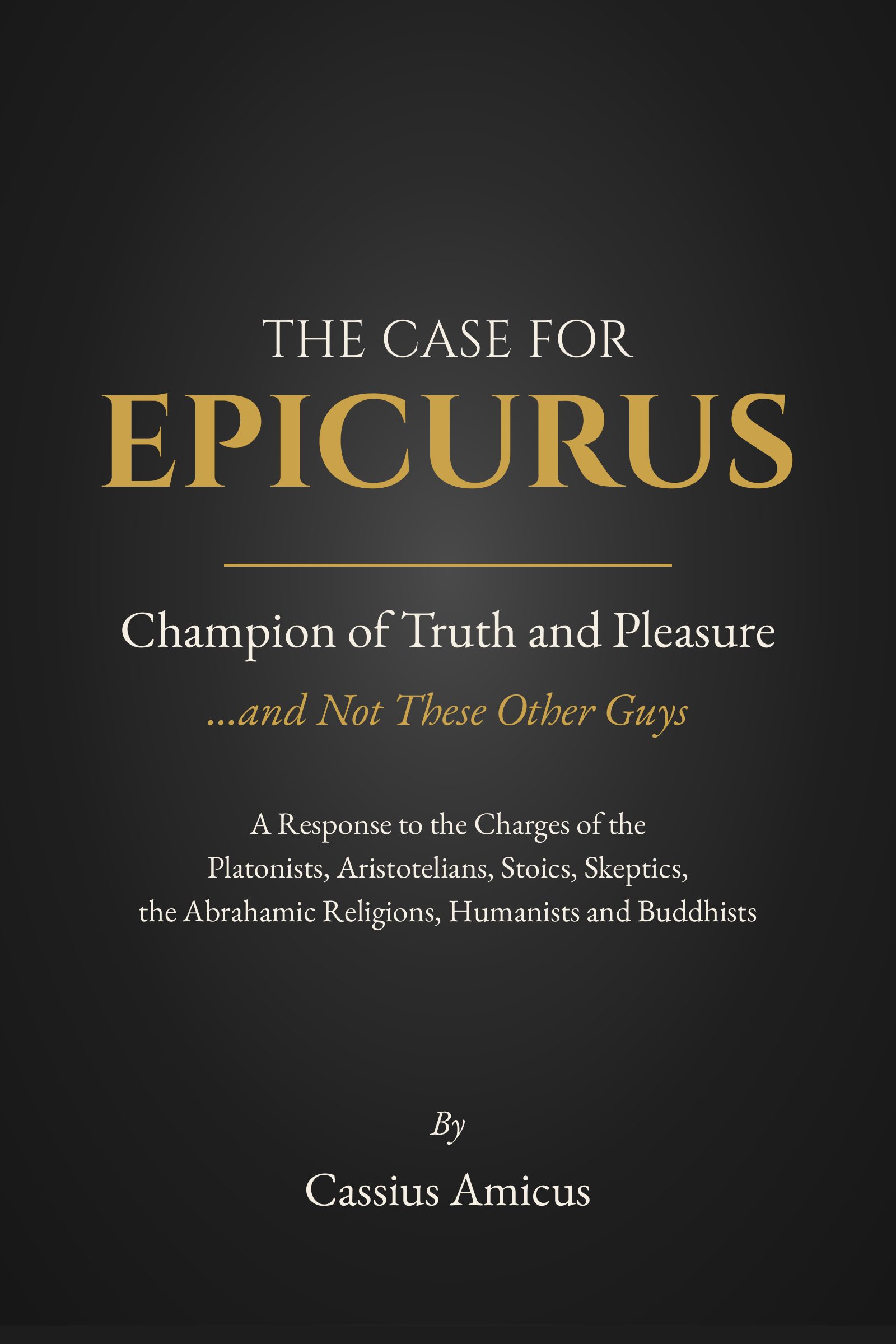
First Edition, October 30, 2026 (first published as Why You Should Choose EPICURUS To Be Your Guide*)*
The Case for Epicurus compares the guidance of Epicurus with that of the seven traditions that have most often been set against him, and argues that Epicurus is the better guide. It opens with the positive case for Epicurus as the champion of truth and, on that truth, the architect of the happy life in this world, including what he meant by “pleasure,” and then devotes a chapter to each tradition. Each of those chapters states a tradition in the words of its own leading writers, on the Canon, Physics and Ethics, and sets out the Epicurean reply.
You can read the whole book online on this site, chapter by chapter, using the links below or the “The Case for Epicurus” section of the left-hand menu. Or you can download it for any ebook reader, or as a PDF book.
EPUB: for Apple Books, Kobo, Moon+ Reader, and all standard ebook readers. | AZW3: for Kindle devices and the Kindle app. | PDF: a 6 × 9 inch book layout for reading on a computer or tablet, or for printing, with a linked table of contents and bookmarks.
Read the Book Online
Section titled “Read the Book Online”- Introduction: What This Book Contains: what the book covers and how it is arranged.
- Champion of Truth, Architect of the Happy Life: the positive case. Epicurus as the discoverer of truth and, on that truth, the architect of the happy life in this world, his Canon, Physics and Ethics, and pleasure in the full sense in which he used the word.
- The Charges: the ten charges brought against Epicurus and against nature, with his answer and the positions of the seven traditions side by side.
- Against The Platonists: Socrates and Plato, the Forms, the divine craftsman and the immortal soul.
- Against The Aristotelians: Aristotle’s purposes in nature, his unmoved mover and his ethics of contemplation.
- Against The Stoics: providence, fate and virtue as the only good, in Cicero, Seneca, Epictetus and Marcus Aurelius.
- Against The Skeptics: Pyrrho, the Academic Skeptics and Sextus Empiricus, who denied that anything can be known.
- Against The Abrahamists: Judaism, Christianity and Islam on faith, creation, providence, judgment and pleasure.
- Against The Humanists: from Boethius and the Renaissance through Kant and Comte to the modern Humanists, with Nietzsche’s diagnosis.
- Against The Buddhists: the Buddha’s teaching that life is suffering and desire its cause, the senses “on fire,” no self and rebirth, and Nirvana against pleasure.
- Conclusion: Why You Should Choose Epicurus as Your Guide: the single view of the world that runs through the seven traditions, the Good they impose on others, and the Epicurean alternative.
- Epilogue: What Next?: how to begin. Educating yourself accurately, why reliable guides are few, DeWitt’s strengths and limits, small groups of dedicated friends, this book as a test of any guide, and why to grasp the direction of Epicurus’s thought before reading the texts piecemeal.
The online chapters also include guides to the source texts on this site, which are left out of the ebook. Every quotation in both versions links to the full text it comes from.
How to Read the Download
Section titled “How to Read the Download”On your phone or tablet: open the EPUB file with any ebook app, such as Moon+ Reader (Android), Apple Books (iPhone and iPad), Kobo or Lithium. Most of these can also read the book aloud.
On a Kindle: download the Kindle Edition (AZW3) and transfer it to your Kindle by USB, or send it with Amazon’s Send to Kindle service.
On a desktop computer: Calibre is a free ebook reader and library manager for Windows, Mac and Linux.
The links in the ebook open the source texts on EpicurusToday.com, so a connection to the internet is needed to follow them.
About This Ebook
Section titled “About This Ebook”This ebook is by Cassius Amicus, editor of EpicurusToday.com and administrator of the EpicureanFriends.com discussion community.
Citations to the Epicurean texts and other original works were gathered with the assistance of ClaudeAI. All opinions, editorial decisions and judgments as to content are solely those of Cassius Amicus, who is solely responsible for everything presented here.
Comments, corrections and suggestions are welcome at EpicureanFriends.com.